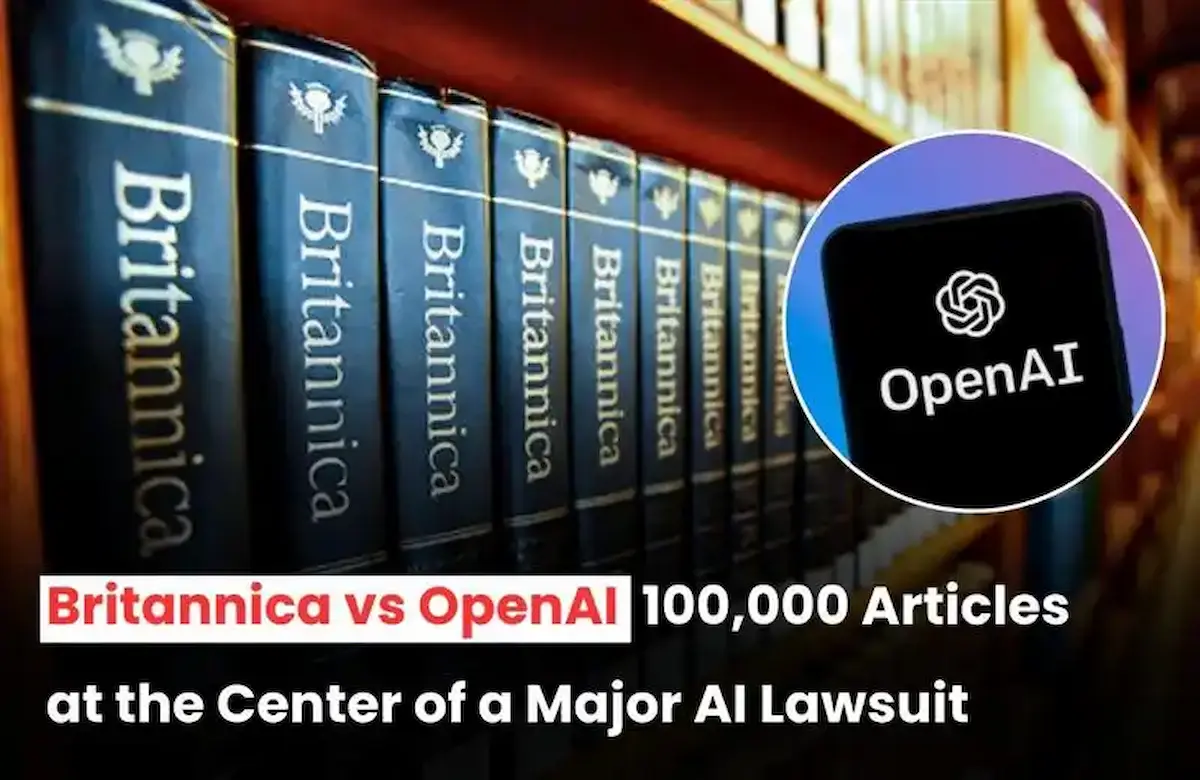
The digital era has brought forth a significant clash between traditional knowledge repositories and the rapid advancement of artificial intelligence. At the heart of this evolution is the Encyclopedia Britannica vs OpenAI Copyright Infringement case, a legal battle that could redefine the boundaries of intellectual property rights in the age of machine learning. Encyclopedia Britannica, a name synonymous with verified and curated human knowledge for over two centuries, has filed a lawsuit against OpenAI, the creator of ChatGPT. The core of the allegation is that OpenAI utilized approximately 100,000 high-quality articles from the Britannica archives without authorization to train its large language models.
Understanding the Legal Basis of the Encyclopedia Britannica vs OpenAI Copyright Infringement Case
The lawsuit filed by Encyclopedia Britannica centers on the unauthorized reproduction and distribution of copyrighted material. In the legal filing, the plaintiff argues that OpenAI’s business model relies on “scraping” vast amounts of data from the internet, including proprietary content that sits behind paywalls or strict Patent licensing agreements. The Encyclopedia Britannica vs OpenAI Copyright Infringement case highlights a growing tension between AI developers and content creators regarding the fair use doctrine. While OpenAI may argue that training a model is a transformative process, Britannica asserts that using 100,000 detailed articles to create a competing information service constitutes a direct violation of their rights.
The Critical Role of IP Protection in the Evolution of Artificial Intelligence
Intellectual property rights are designed to reward creators for their labor and investment. This lawsuit emphasizes why IP Protection is essential for maintaining the integrity of educational resources. If AI companies are permitted to ingest the world’s most authoritative databases for free, the financial incentive to produce high-quality, fact-checked content may vanish. Britannica claims that its editorial process involves thousands of experts and rigorous verification, all of which represent a massive capital investment. Without robust IP Protection mechanisms, the company argues that AI models will essentially “harvest” the value of human expertise while offering nothing in return to the original authors.
Read More: China and Austria Extend PPH Pilot Program for Five Years Until 2031
Allegations of Systematic Copyright Infringement in the Training of ChatGPT
The specific allegations in this dispute involve the scale of the data usage. According to the complaint, OpenAI did not just take snippets of information but systematically integrated nearly 100,000 full-length articles into their training sets. This level of data ingestion is what Britannica classifies as Copyright Infringement on an industrial scale. The legal team representing the encyclopedia argues that ChatGPT can now summarize or replicate the specific style and factual depth of Britannica’s entries, effectively acting as a market substitute. When a software program can provide the same value as a subscription-based encyclopedia by using that encyclopedia’s own data, the claim of Copyright Infringement becomes a central pillar of the IP litigation.
Potential Legal Consequences and the Future of AI Training Data Licensing
The outcome of the Encyclopedia Britannica vs OpenAI Copyright Infringement case will likely set a massive precedent for the tech industry. If the court rules in favor of Britannica, OpenAI and other AI developers might be forced to negotiate licensing deals for every piece of copyrighted data they use. This would transform the “wild west” of AI training into a regulated marketplace where permission is a prerequisite for progress. Conversely, a ruling for OpenAI could broaden the definition of fair use, allowing AI to continue learning from publicly accessible or subscription-based digital content without direct compensation to the owners.
Balancing Technological Innovation with the Rights of Traditional Content Publishers
Ultimately, this case is about more than just a single lawsuit, it is about the ethics of the information economy. The Encyclopedia Britannica vs OpenAI Copyright Infringement case forces us to ask how we can support the growth of helpful AI tools while respecting the laws that protect human creativity. As the legal proceedings move forward, the global community will be watching closely to see how the justice system balances the need for technological advancement with the timeless necessity of intellectual property protection. The resolution will determine whether the future of AI is built on a foundation of collaboration or a series of high-stakes legal confrontations.
Read More: Enveric Biosciences Announces Registration of Five Trademarks with CIPO in Canada