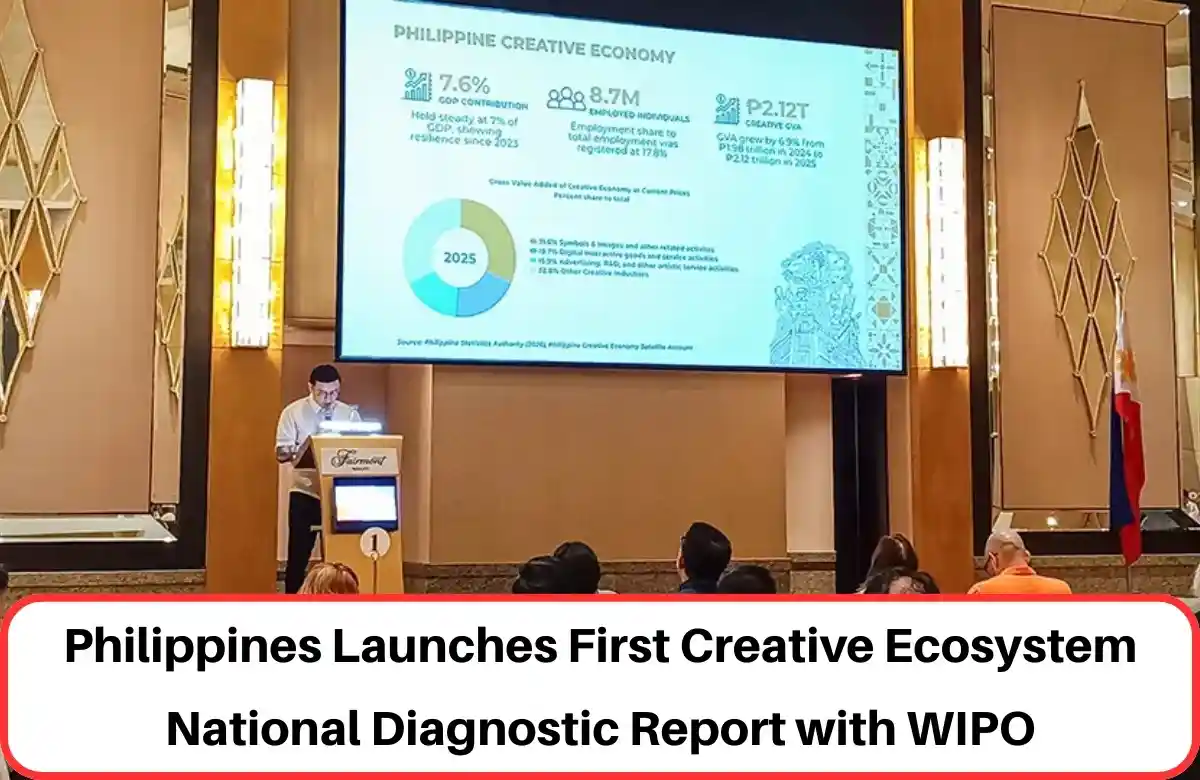
The World Intellectual Property Organization (WIPO), together with the Department of Trade and Industry (DTI), the Intellectual Property Office of the Philippines (IPOPHL), and the Philippine Statistics Authority (PSA), recently released the first Philippines Creative Ecosystem National Diagnostic Report in Manila. This publication introduces the Creative Economy Data Model (CEDM). WIPO built this analytical framework to measure how creative assets convert into intellectual property (IP), economic value, and development outcomes. By establishing a clear, data-driven baseline, the WIPO Philippines Creative Ecosystem assessment gives lawmakers a practical tool to evaluate how state governance, IP protection systems, and domestic markets drive national growth. It’s a major step forward. This WIPO National Diagnostic Report provides the solid evidence needed to build better statutory and regulatory frameworks for the Philippines New Ecosystem processes.
Institutional Collaboration and Statutory Objectives of the WIPO National Diagnostic Report
This new WIPO National Diagnostic Report is the result of a coordinated, inter-agency effort to standardize how we measure IP assets nationwide. In modern economic management, intellectual property rights form the legal foundation for industrial expansion. They turn human talent into protected corporate and individual property. But how do we protect what we do not measure? Officials from the DTI and IPOPHL emphasize that state goals fail without objective data. Lawmakers need accurate metrics to find the legal gaps in enforcement, commercialization, and administration.
This framework moves away from just tracking immediate commercial sales. Instead, it reviews the total legal and physical infrastructure that supports IP creation. The core metrics include:
- Regulatory governance and administrative rules run by state authorities.
- The speed, cost, and legal enforcement of IP registration systems.
- Training systems that build technical skills and talent.
- Funding options, public infrastructure, and market absorption rates.
By setting these clear baselines, the Philippines Creative Ecosystem National Diagnostic Report works as an operational guide. It helps the state align its domestic business laws with international IP standards.
Read More: WIPO and SIPO Launch First IP Management Clinic for Slovenian SMEs
Legal, Regulatory, and Economic Findings within the Philippines Creative Economy Report
Data within the Philippines Creative Economy Report shows that the country has a stable environment for generating valuable IP assets. Creative industries already drive the economy by contributing heavily to gross domestic product and employment. But there is a catch. The diagnostic shows that too much business remains locked in labor-intensive sectors rather than capital-intensive or technology-driven industries. This setup limits overall economic output.
To shift toward a high-value economy, our legal and financial systems must prioritize domestic IP ownership. The WIPO Philippines Creative Ecosystem report highlights several critical legal and economic steps:
- Speeding up the formal registration and commercial use of original domestic IP.
- Creating targeted financial tools to give small businesses and creators easier access to capital.
- Growing domestic and foreign markets to absorb high-value, tech-driven creative services.
- Using strong legal protections to reward corporate research, technical shifts, and entrepreneurship.
By fixing these structural issues, the state can move away from low-margin, labor-heavy services. And it builds a safer economic framework rooted in legally protected, high-value domestic property.
Future Policy Implementations for the WIPO Philippines Creative Ecosystem
The launch of the Philippines Creative Ecosystem National Diagnostic Report creates a permanent statistical baseline for future laws and regulations. Government leaders don’t want this to be a one-time study. They plan to turn this initial diagnostic into a regular monitoring tool. This continuous tracking lets the state see structural changes as they happen, judge the impact of new laws, and make quick policy changes. Because this model works, WIPO is already expanding it to neighboring countries like Indonesia.
The future of the Philippines Creative Economy Report framework relies on long-term cooperation between international bodies and domestic state agencies. By using clear statistics to manage the WIPO Philippines Creative Ecosystem, the state ensures its legal updates stay precise and effective. In the end, blending IP protections with solid economic data remains our best tool to grow economic value, protect local assets, and stay competitive globally.
Read More: WIPO Connects with African Startups and Investors at AI & Tech Summit in Kenya