
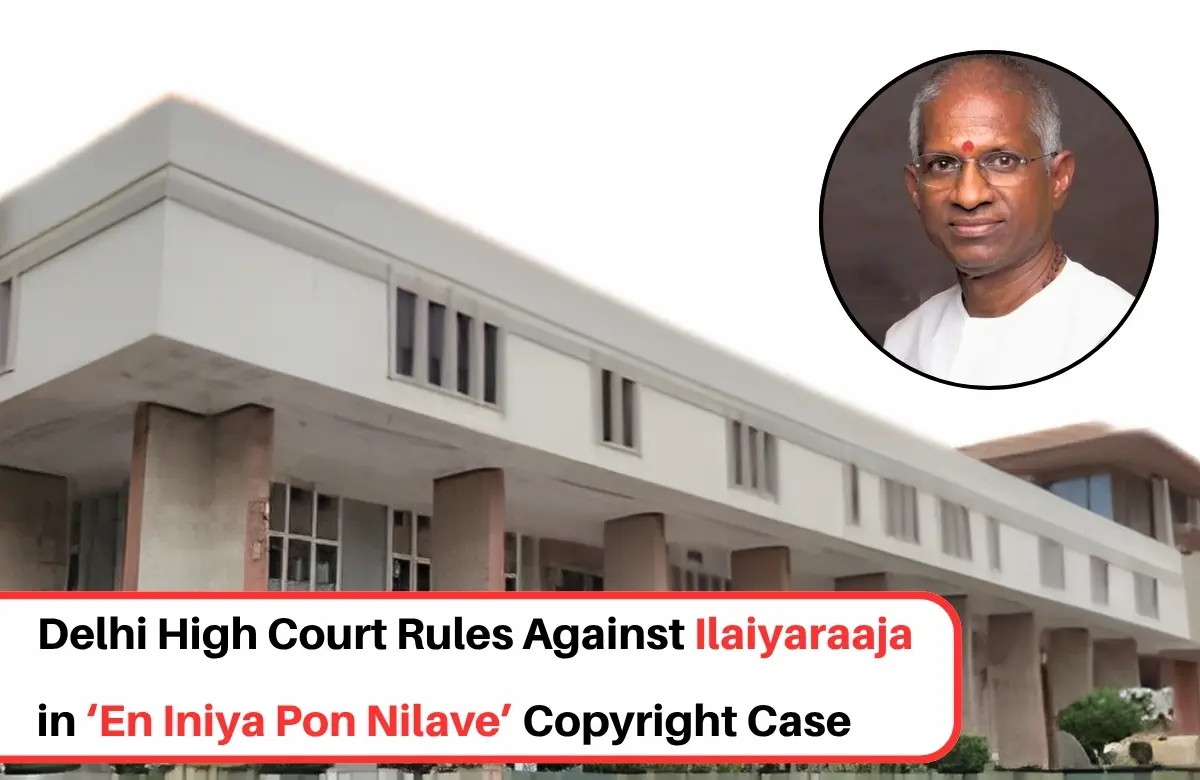
The Indian music industry recently faced a major legal shift regarding Intellectual Property Rights. Following a high-stakes judicial order, the Delhi High Court ruled against the renowned composer in the Ilaiyaraaja vs Saregama Copyright Dispute. This specific IP litigation involves the ownership and commercial exploitation of the hit Tamil song ‘En Iniya Pon Nilave’ from the film Moodu Pani. It’s a case that forces us to look closely at how contracts between artists and labels function over several decades. As the court applied the Copyright Act to these facts, the ruling clarified the limits of IP Protection within the film industry.
Examining the Core Facts of the Ilaiyaraaja vs Saregama Copyright Dispute
What sparked the Ilaiyaraaja vs Saregama Copyright Dispute? Essentially, it was a disagreement over the legal power to sell and distribute specific melodies. Ilaiyaraaja sought to challenge the ownership claims held by Saregama India Limited. The primary question was whether the rights granted during the film’s production stayed with the creator or moved to the label through legal assignment. By reviewing old contracts, the court had to decide if the label’s ongoing use of the music constituted Copyright Infringement. But can an artist actually take back their rights after forty years? The Ilaiyaraaja vs Saregama Copyright Dispute suggests that, without specific legal caveats, they cannot.
Understanding the Legal Framework Behind the Ilaiyaraaja Copyright Case
To understand the Ilaiyaraaja copyright case, you have to look at how Indian law treats the bond between a composer and a producer. Usually, the author is the first owner of a copyright. However, this changes if there’s a “contract of service” or a written assignment. During the Ilaiyaraaja copyright case, the bench examined evidence showing that Saregama was the legal successor to the original film producers. The court required proof of a valid transfer of rights, which is the backbone of IP Protection. Because the paperwork supported the record label’s long history of possession, the Ilaiyaraaja copyright case ended in a loss for the composer.
Analyzing the High Court Decision on the Saregama Copyright Dispute
This judgment in the Saregama copyright dispute proves that written contracts are everything in the music business. The Delhi High Court noted that once a composer assigns rights for a fee, they can’t simply reclaim them later without a solid legal reason. In the Saregama copyright dispute, the court found the label had used ‘En Iniya Pon Nilave’ for years without any legal pushback. That long period of quiet usage helped the label’s case. And that’s why the Saregama copyright dispute is now a warning for artists, you must be incredibly careful when signing assignment deeds to prevent future Copyright Infringement.
Read Also: Three Trademark Applications Filed for ‘Cockroach Janta Party’ as Viral Movement Surges
The Role of IP Protection and Contractual Agreements in Music
Much of this ruling focuses on how IP Protection applies to older songs. While Trademark, Copyrights, and Patent Protection exist to help creators, it also creates a clear path for legal commercial transfers. When a song is made for a movie, the contract decides if the rights last for a short time or forever. In this instance, the composer’s request for protection didn’t hold up against the label’s existing contracts. It’s about balance. Effective IP Protection has to weigh the artist’s moral rights against the economic rights of the company that paid for the work.
Preventing Copyright Infringement Through Clear Title and Documentation
Copyright Infringement is usually the result of unorganized paperwork. By ruling against Ilaiyaraaja, the court made it clear that using a song under a legal assignment isn’t Copyright Infringement. To win a claim of Copyright Infringement, a plaintiff has to prove they own a title that strictly excludes the other person. Here, the evidence showed the label bought the rights through a legal chain of events. It’s a simple lesson. Artists need to keep a perfect record of every permission they sign if they want to avoid these results.
Read Also: Delhi High Court Declares GSK’s Calpol a Well-Known Trademark in India
Future Implications of the Ruling for the Indian Music Industry
This legal outcome sets a firm precedent for future fights between creators and distributors. It confirms that old contracts still matter, even if the way we listen to music has changed. We can’t deny a composer’s creative genius. But the law has to follow the written word of the agreement. This ruling gives labels the legal certainty they need to manage their catalogs. It’s a clear message to the industry: in professional music, the contract is the final word.