
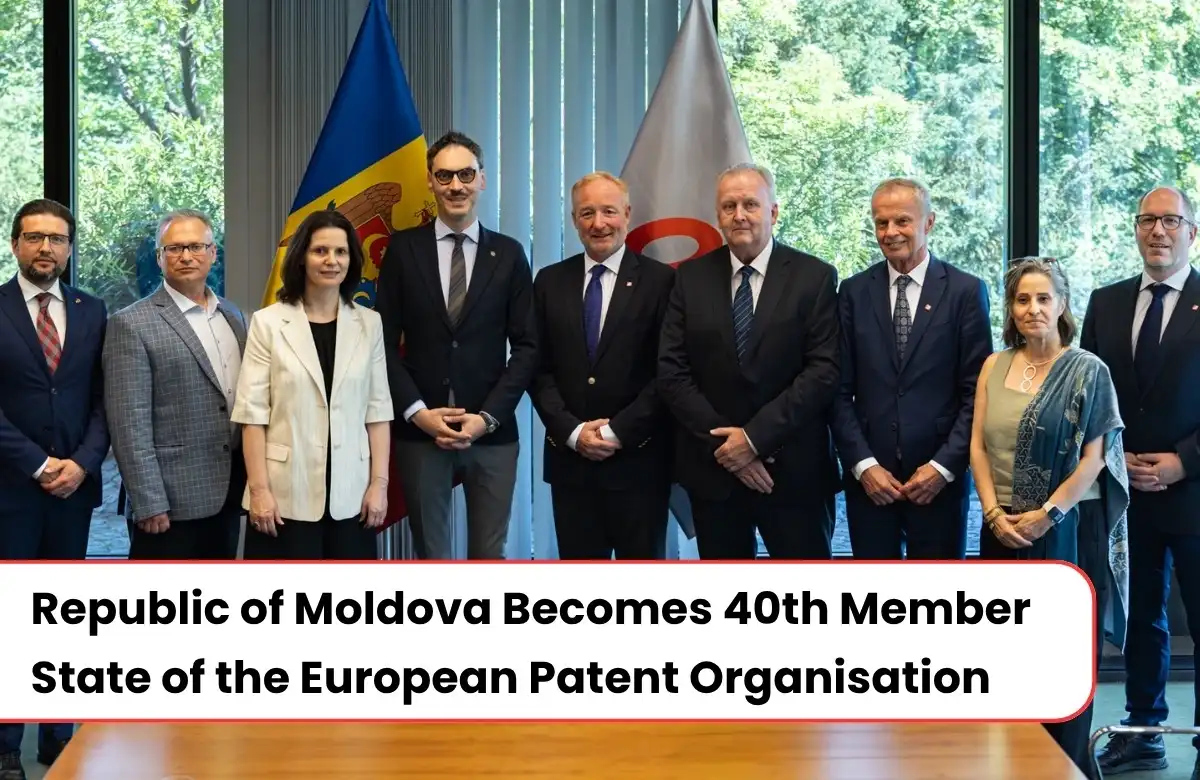
International intellectual property law reached a major turning point on 1 June 2026. On this date, the Republic of Moldova joined the European Patent Organization. This structural change follows the deposit of its instrument of accession to the European Patent Convention (EPC) on 25 March 2026. What does this mean for practitioners? It means the country merges its local statutory framework into the broader European legal architecture. By taking this final step, Moldova joins the European Patent Organisation systems as a full member state. This replaces its old, limited status as a validation state. Why does this matter? We must emphasize that this integration strengthens statutory enforcement and legal certainty for all patent applicants. Furthermore, as Moldova joins the EPO, regional enforcement mechanisms expand into new territory. The entry into force means that this inclusion happens automatically. As a result, any European patent application filed on or after 1 June 2026 will automatically include the designation of this new contracting state.
Historical Legal Framework and the Transition from Validation State to Full Membership Status
This milestone is not an overnight development. The accession of the Republic of Moldova to the EPC concludes decades of legal and technical cooperation between the European Patent Office and the State Agency on Intellectual Property of the Republic of Moldova (AGEPI). This bilateral work began in the mid-1990s. Later, in October 2013, both offices signed a formal validation agreement, which entered into force on 1 November 2015.
Under that old validation framework, you had to follow a multi-step process. Patent applicants seeking protection in the Republic of Moldova had to explicitly request an extension for their granted European patents. This extension required a separate validation fee paid directly to the European Patent Office. But it was not an automatic right. It functioned merely as an optional choice, which added extra administrative steps for international filers.
Read More: WIPO Launches IP Clinics in Lao PDR and Cambodia to Empower SMEs
The transition to full membership required a specific statutory timeline:
- 13 February 2019: The Republic of Moldova submitted its formal request to accede to the EPC.
- 13 December 2022: The Administrative Council of the European Patent Organization issued an official invitation to join.
- 5 February 2026: The Parliament of the Republic of Moldova ratified the accession law.
- 25 March 2026: The government deposited its instrument of accession under Article 169(2) EPC, fixing the effective date for 1 June 2026.
Consequently, the country has changed its legal status from a validation state to a designated state. It’s a clean break from the old system that simplifies the administrative process for international patent filers.
Procedural Impact on European Patent Applications and Patent Office Rules as Moldova Joins the EPO
This integration alters the procedural rules governing your patent filings. For all new European patent applications filed on or after 1 June 2026, the Republic of Moldova is automatically a designated state. You don’t need to file a separate validation request. You won’t pay an individual validation fee either. Instead, the standard designation fee paid during the European regional phase covers the Republic of Moldova alongside the other 39 member states.
Read More: CNIPA Deputy Commissioner Visits WIPO and EUIPO to Strengthen IP Cooperation
These updated rules also apply to international applications filed under the Patent Cooperation Treaty (PCT) that enter the European regional phase. Any PCT application with an international filing date on or after 1 June 2026 will automatically designate the country for a regional European patent.
But what happens to your pending cases? Specific transitional provisions apply here to maintain absolute legal clarity. You cannot designate the Republic of Moldova retroactively if your application has a filing date before 1 June 2026. For these older cases, you must still use the old validation system rules and pay the required validation fee. Additionally, European divisional applications divided from a parent application filed before 1 June 2026 cannot claim full automatic designation. They must follow the old validation pathway. To help applicants who were preparing filings in May 2026, the European Patent Office allowed filers to explicitly request a filing date of 1 June 2026. This ensured they could benefit immediately from the new membership status.
Economic Implications for Intellectual Property Rights and Regional Innovation Ecosystems as Moldova Joins the EPO
The accession of the Republic of Moldova to the EPC expands the centralized European patent market to over 715 million people across 40 countries. This change increases the statutory and commercial value of European patents as corporate assets. Inventors can now protect industrial innovations in the region through a single, centralized examination procedure.
For domestic innovators and research institutions, full membership gives direct access to centralized patent protection services. As the Republic of Moldova joins the European Patent Organization, it integrates the local economy into the European statutory framework. AGEPI will continue its joint work with the European Patent Office to align administrative practices and increase technical capacity. This alignment ensures that the national intellectual property framework operates in complete compliance with European legal standards.
Furthermore, this development directly supports the country’s broader foreign policy objectives. Following the official opening of European Union accession negotiations in June 2024, harmonizing intellectual property law is a vital step toward deeper European integration. By providing a stable, predictable, and legally secure patent system, the country reduces administrative burdens for businesses and creates a better economic environment for foreign direct investment and long-term technological development.
Read More: Expiry of the SIPP Scheme in India: Impact on Startups and IP Protection