
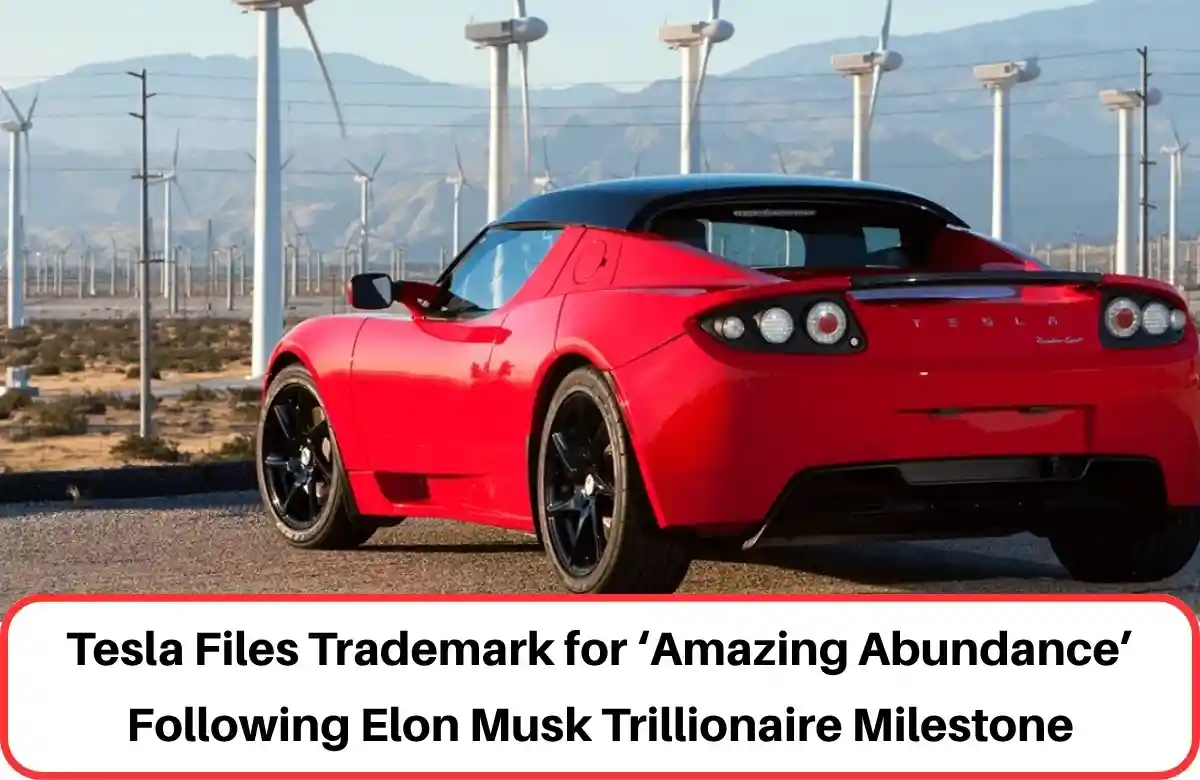
Tesla, Inc. has officially expanded its intellectual property portfolio. By submitting a new Tesla trademark filing to the United States Patent and Trademark Office (USPTO), the corporation is securing exclusive rights to the literal element “Amazing Abundance.” It’s a calculated legal move. Why now? This statutory protection process follows a historic shift in the capital standing of the company’s Chief Executive Officer. The Elon Musk trillionaire milestone occurred after a major initial public offering (IPO) of SpaceX, pushing his individual net worth beyond 1.2 trillion dollars. But it’s about more than just personal wealth. Observers note that the Tesla Amazing Abundance strategy points directly to an economy driven by artificial intelligence and automated systems.
Under current statutory frameworks, a trademark application grants a corporation exclusive rights to use specific phrases in commerce. It protects the brand. It stops competitors from using confusingly similar marks. We can see that this specific Tesla trademark filing covers explicit international classifications tied directly to the organization’s future operations. The timing aligns perfectly with the Elon Musk trillionaire milestone. It’s well known that the executive predicts a future where automated manufacturing drives down costs, creating a surplus of consumer goods. Consequently, the commercial rollout of the Tesla Amazing Abundance mark will likely protect marketing campaigns for the company’s proprietary artificial intelligence systems.
Legal Scope and Commercial Purpose of the Tesla Trademark Filing
The operational scope of any corporate trademark depends entirely on the international classification of goods and services selected during the application process. In this instance, the Tesla trademark filing structures corporate naming rights within sectors related to robotics, advanced computing, and artificial intelligence infrastructure. By submitting this application, Tesla establishes a legal priority date. This date protects the company against third-party entities attempting to register identical names within the same market sector.
Read More: USPTO Appoints Deborah Stephens as Permanent Chief Information Officer
Corporate filings indicate that this statutory protection targets the upcoming Tesla Optimus humanoid robot. This legal strategy secures two main objectives:
- It establishes a clear perimeter of brand protection around new robotics divisions.
- It gives corporate counsel the statutory tools required to file infringement litigation if competitors copy the mark.
And because trademark compliance requires strict adherence to regulatory standards, this proactive filing locks down proprietary terms early. It secures the branding before these autonomous machines enter global supply chains.
The Strategic Alignment with the Elon Musk Trillionaire Milestone
Corporate intellectual property strategies rarely happen in a vacuum. They connect to the financial standing of principal shareholders. The recent Elon Musk trillionaire milestone provides massive capital leverage. This alters long-term project planning. Because of the surge in valuation at SpaceX, market attention is shifting to how this capital concentration affects asset distribution.
This wealth surge matches public statements regarding the future utility of traditional currency. Recent industry discussions show that automated labor could rewrite standard commercial laws. If autonomous humanoid robots replace human laborers, manufacturing expenses plummet. Consumer goods become cheap. Therefore, the corporate goal here is simple. We protect the legal terminology of this post-scarcity production model, thereby creating a statutory link between the milestone and the technical deployment.
Read More: WIPO Connects with African Startups and Investors at AI & Tech Summit in Kenya
Technical and Market Realities of the Tesla Amazing Abundance Strategy
The actual success of the Tesla Amazing Abundance strategy depends entirely on engineering. While the USPTO application locks down the legal words, deployment depends on hitting software milestones. Competitors aren’t waiting around. International robotics firms are rapidly building automation tech. Because of this, securing corporate branding is vital for market differentiation.
The success of this operational framework rests on specific pillars:
- Mass-producing autonomous units that handle repetitive tasks without human oversight.
- Reducing supply chain friction via automated logistics to lower baseline costs.
- Creating economic models to address labor displacement caused by artificial intelligence.
Ultimately, securing this trademark proves that the corporation is preparing its commercial legal framework for intense competition. Other firms can build robots that move. But by locking down this phrase, Tesla shapes the legal and marketing narrative. It’s a race to see if the company can convert statutory protections into actual, high-yield manufacturing operations.