
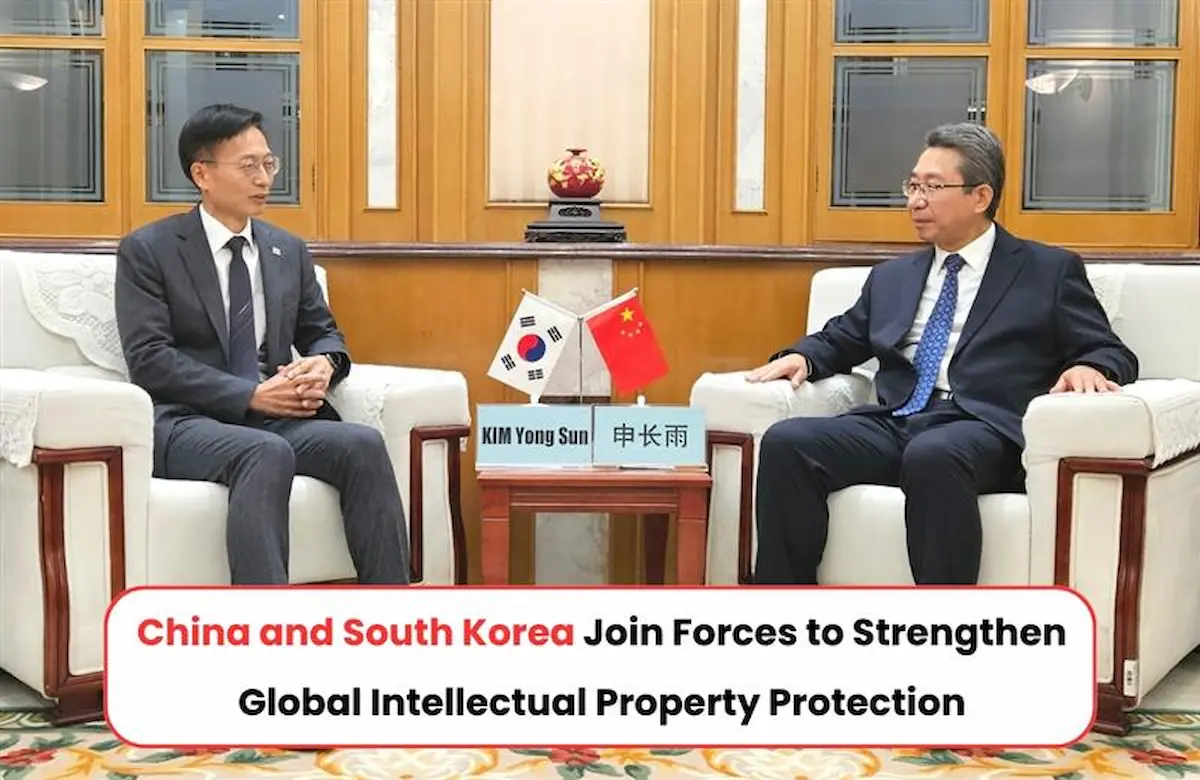
Shen Changyu, Commissioner of the China National Intellectual Property Administration (CNIPA), recently hosted a high-level delegation in Beijing headed by KIM Yong Sun, Minister of the Ministry of Intellectual Property (MOIP) of the Republic of Korea, in a major step to strengthen international legal frameworks for innovation. This China and Korea IP agreement demonstrates both countries’ dedication to improving their regulatory frameworks and making sure that strong IP protection procedures sustain international trade. The conversations focused on coordinating strategic objectives to enable a safer atmosphere for economic expansion and technical development.
Strategic Bilateral Relations Through the China and Korea IP agreement
The CNIPA and the MOIP have developed an extensive working partnership marked by regular professional exchanges under the strategic direction of their respective national presidents. The confirmation of a recently signed Memorandum of Understanding (MoU) on cooperation was the main outcome of this recent meeting. This legal document provides the fundamental basis for upcoming collaborative projects that are intended to improve the effectiveness of IP or Patent protection procedures and reduce administrative procedures. China and the Republic of Korea will prioritize cooperative efforts to address the changing demands of global innovators, according to the pact.
Evaluating Progress in Global Intellectual Property Standards and Integration
Minister KIM Yong Sun recognized China’s progress in the field of intellectual property during the summit, focusing on China’s globalization initiatives. One of the most important ways to avoid complicated intellectual property disputes between multinational corporations is to incorporate international standards into domestic frameworks. Both the CNIPA and the MOIP seek to establish a predictable legal environment that lowers the risks related to patent and trademark disputes by abiding by international standards. The goal of this alignment is to provide a steady investment and research and development environment.
Enhancing Administrative and Legal Mechanisms for Comprehensive IP Protection
In-depth conversations about the real-world implementation of intellectual property laws were made possible by the gathering. Improving the systems that oversee intellectual property protection was a major priority in order to make sure they are robust against emerging threats. Both sides acknowledged that avoiding needless IP litigation requires clear patent and trademark processes as well as high-quality administrative adjudication. The China and Korea IP agreement aims to improve their enforcement capacities by exchanging best practices and technical expertise, giving copyright holders operating in both jurisdictions greater legal certainty.
Expanding Cooperation to Support Innovation and Reduce IP Litigation Frequency
The delegates pledged to extend their bilateral collaboration beyond customary administrative duties. The goal is to use intellectual property to spur technical and scientific advancement. By safeguarding the commercial value of new ideas and lowering the frequency of IP litigation through clearer ownership definitions, increased collaboration is anticipated to produce favorable economic results. Coordination of intellectual property strategy is essential to maintaining competitive advantages and enabling easy market entrance for domestic businesses, as both nations continue to dominate in industries like integrated circuits and digital technologies.
Read Also: WIPO China Shanghai Service Administers Over 200 Foreign-Related Intellectual Property Cases
Future Perspectives on Continuous Dialogue and IP Protection Result Achievement
A shared agenda for the future of China-ROK intellectual property relations was established at the end of the meeting. KIM Yong Sun and Shen Changyu both stressed the value of ongoing communication to address new issues of shared interest. The two agencies want to accomplish more significant outcomes in the area of IP governance by keeping lines of communication open. The goal of this continuing collaboration is to proactively address the underlying causes of legal conflicts and to consistently enhance the legal framework that protects intellectual property rights and protection globally.