
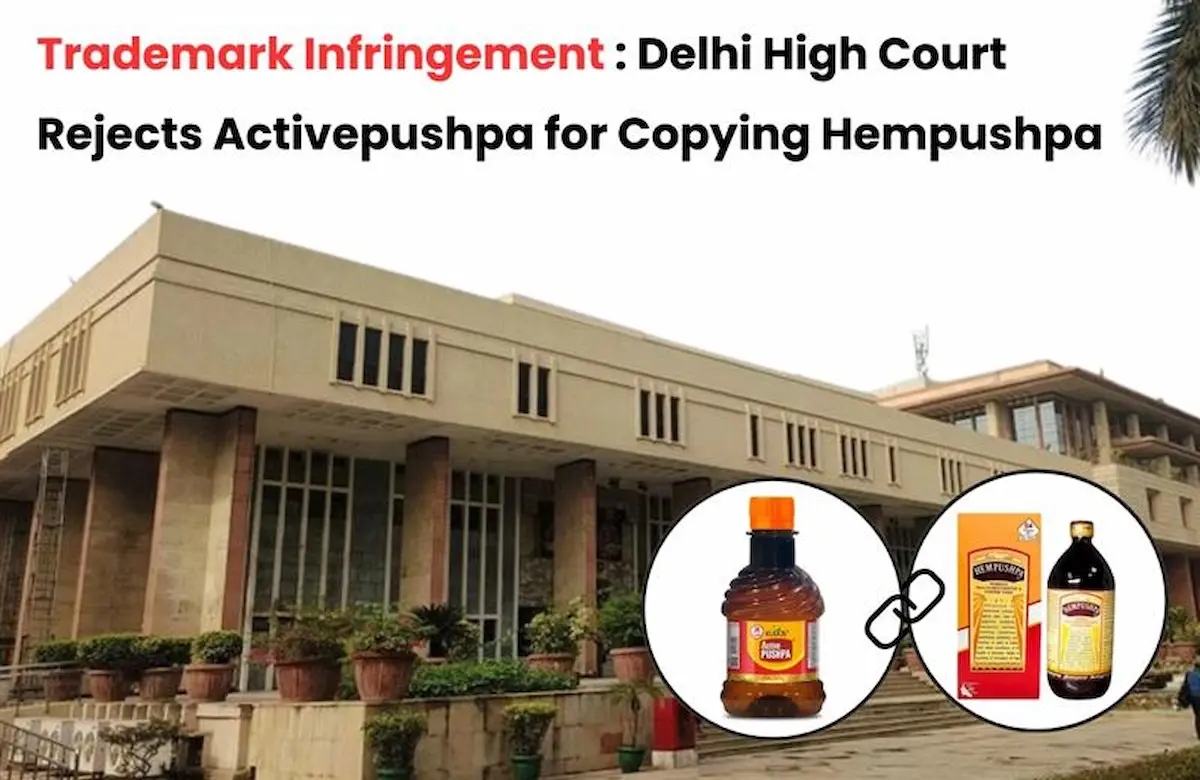
In the competitive world of Ayurvedic medicine, brand identification is more than just a name; it is a trust mark established over time. A recent ACTIVEPUSHPA vs HEMPUSHPA Trademark Case ruling by the Delhi High Court has issued a strong message to businesses aiming to capitalize on the success of established brands. By invalidating the trademark ‘Activepushpa,’ the court emphasized the importance of intellectual property rights, particularly preserving the legendary ‘Hempushpa’ brand against fraudulent replication.
ACTIVEPUSHPA vs HEMPUSHPA Trademark Case: How the Legal Battle Began
The legal dispute began when Rajvaidya Shital Prasad and Sons, the long-time manufacturers of the well-known Ayurvedic tonic ‘Hempushpa,’ discovered a suspiciously identical product on the market. The respondent had registered the brand name ‘Activepushpa’ for pharmaceutical and therapeutic items. Recognizing the possibility of brand dilution and customer confusion, Hempushpa’s proprietors filed a rectification petition under the Trademarks Act, requesting that the competitor mark be removed from the official register.
The petitioner claimed that they were the first registered users of the mark, and that ‘Hempushpa’ had built significant goodwill and reputation over time. They claimed that the use of the name ‘Activepushpa’ was not a coincidence, but rather a deliberate ploy to capitalize on the original brand’s established market position.
Read Also: Don’t Miss These Important Instructions Before Your Trademark and Patent Agent Examination
Spotting the Copycat: Why Phonetic Similarity Is Risky
In the ACTIVEPUSHPA vs HEMPUSHPA Trademark Case, the name of Justice Tejas Karia, who presided over the case, emphasized the concept of “deceptive similarity.” In trademark law, a mark is regarded as deceptively similar if it resembles another mark so closely that it is liable to deceive or confuse. When it comes to pharmaceutical products, the court’s scrutiny is often increased because uncertainty in this area might pose health concerns to customers who acquire the incorrect treatment.
The court noted that both marks had the suffix ‘Pushpa,’ and their overall phonetic and structural compositions were very similar. Because both items aimed at the same consumer base and were distributed through the same channels, it was estimated that a person with “average intelligence and imperfect recollection” would mistake one for the other.
Calling Out Dishonesty: The End of the “Free Ride” Strategy
In the ACTIVEPUSHPA vs HEMPUSHPA Trademark Case, one of the most important components of the decision was the court’s determination of dishonest intent. The Delhi High Court observed that the adoption of the ‘Activepushpa’ trademark was unlikely to be independent or fair. Instead, it was considered a “dishonest adoption” designed to deceive the public into assuming that the product was an extension of, or related to, the Hempushpa name.
The court emphasized that in the Ayurvedic sector, where history and legacy are extremely important in consumer preference, cloning a brand’s “look and feel” is a popular but illegal shortcut. By utilizing a name that replicated the key elements of the petitioner’s mark, the respondent was basically attempting to “free ride” on the credibility that Rajvaidya Shital Prasad and Sons had worked hard to build.
The Court’s Final Verdict: Striking Down the Rival Mark
After reviewing all the facts of ACTIVEPUSHPA vs HEMPUSHPA Trademark Case, the Delhi High Court determined that the ongoing presence of ‘Activepushpa’ on the Trademarks Register would only serve to propagate fraud. Consequently, the court ordered the ‘Activepushpa’ trademark to be terminated and the register to be corrected immediately.
This ruling highlights that Trademark registration does not confer complete immunity; if a mark is shown to have been acquired dishonestly or to violate the rights of a previous user, it may be revoked. Before releasing their products, new players in the pharmaceutical industry are strongly advised by the ruling to perform exhaustive trademark searches and guarantee uniqueness.
Why Putting Consumer Safety and Trust First Matters
This ruling is a win for consumer protection, regardless of the legal nuances. In India, a lot of people get their primary medical care from Ayurvedic medications. The ability of consumers to make educated decisions based on brand history and quality standards is compromised when trademarks are duplicated.
The Delhi High Court maintained the idea that market stability depends on brand integrity by invalidating the “Activepushpa” mark. This decision contributes to an expanding corpus of Indian law that upholds the rights of original authors and guarantees that the marketplace continues to be a venue for honest competition rather than dishonest imitation. The lesson for businesses is straightforward: the only long-term routes to brand success are innovation and uniqueness.