
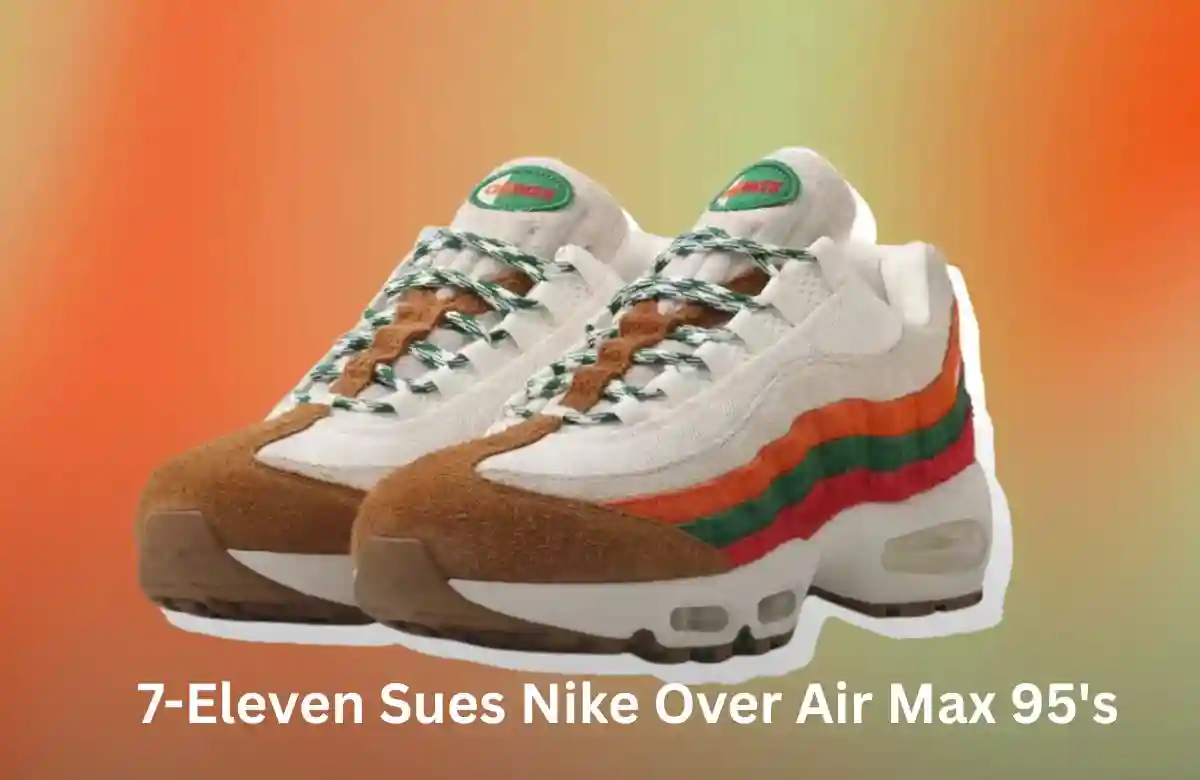
A massive clash between convenience store culture and sneaker fashion has arrived, as 7-Eleven sues Nike in a federal court. The legal dispute centers around Nike’s upcoming Air Max 95 Big Bubble sneaker, which features a color scheme heavily reminiscent of the iconic convenience store’s branding.
The lawsuit alleges that the sportswear giant used a confusingly similar imitation of 7-Eleven’s trademark orange, green, and red stripe design. The 7-Eleven vs Nike legal battle intensifies because of a glaring detail: the shoes were scheduled to launch on July 11—a date universally celebrated by consumers as 7-Eleven Day and Free Slurpee Day
7-Eleven Sues Nike: What is the core of the Dispute ?
According to the legal complaint, 7-Eleven has utilized its signature tri-color palette commercially since at least 1987. The retailer holds multiple federal trademark registrations for this specific combination, which it utilizes on:
- Store signage and structural facades
- Promotional advertisements and digital media
- Proprietary merchandise, apparel, and footwear
The specific sneaker causing the uproar is the Nike Air Max 95 Big Bubble in a Sport Green and Safety Orange colorway. The design stacks cascading layers of green, red, and orange across the upper paneling of the shoe.
7-Eleven argues that Nike’s intentional choice of these colors constitutes a deliberate effort to capitalize on the convenience store’s brand recognition. The lawsuit states that the design will cause widespread public confusion, misleading shoppers into believing the sneakers are an official, authorized collaboration sponsored or endorsed by the Slurpee maker.Based on the unauthorized use of the brand along with the impending launch in a matter of days on 7-Eleven Day (7/11), the retailer acted to protect its intellectual property.
Read More: WIPO Announces Global IP Partnership and Expertise Lineup for WIPO VivaTech 2026
July 11 : A Calendar Collision
The strategic timing of the release is a major focal point in the 7-Eleven vs Nike legal battle. July 11 is an annual marketing milestone where millions of customers visit 7-Eleven locations for free frozen beverages.
The retailer argues that launching a sneaker with Slurpee-style colors on that exact day is not a coincidence, but rather a disregard for its intellectual property. Media coverage and sneaker blogs have already organically dubbed the release the 7-Eleven shoe, which the plaintiff presents as evidence that consumer confusion has already occurred.
Interestingly, this is not the first time these two brands have crossed paths. In 2020, an official 7-Eleven x Nike SB Dunk Low was designed to coincide with the Tokyo Summer Olympics. However, after the pandemic postponed the games, that official collaboration was canceled. 7-Eleven alleges that Nike has now taken it upon itself to push out a similar theme without official licensing or corporate approval.
Demands and Industrial Implications
The convenience store giant tried to handle the matter out of court, repeatedly contacting Nike to pause the release. After Nike indicated it would proceed with marketing and launching the shoe anyway, 7-Eleven escalated the matter to litigation.
7-Eleven has filed multiple counts against Nike, including trademark infringement, unfair competition, and trademark dilution. The legal remedy sought by the retailer is quite aggressive :
- An outright ban on marketing, distributing, or selling the Air Max 95 model.
- A mandatory recall of all pairs already shipped to distributors or retail partners.
- Surrendering all financial profits Nike stands to make from the footwear line.
- The physical destruction of the infringing shoes and associated promotional assets.
7-Eleven Sues Nike: Final Showdown
As 7-Eleven sues Nike, the broader retail industry is paying close attention. This lawsuit demonstrates that corporate intellectual property extends far beyond a literal logo; a brand’s unique color identity can be just as legally protected. In a modern hype-driven marketplace where lifestyle crossovers are highly lucrative, the outcome of this case will set a major precedent for how far designers can go when borrowing iconic cultural imagery.
Read More: National Intellectual Property Strategy 2030 Launched in the Dominican Republic