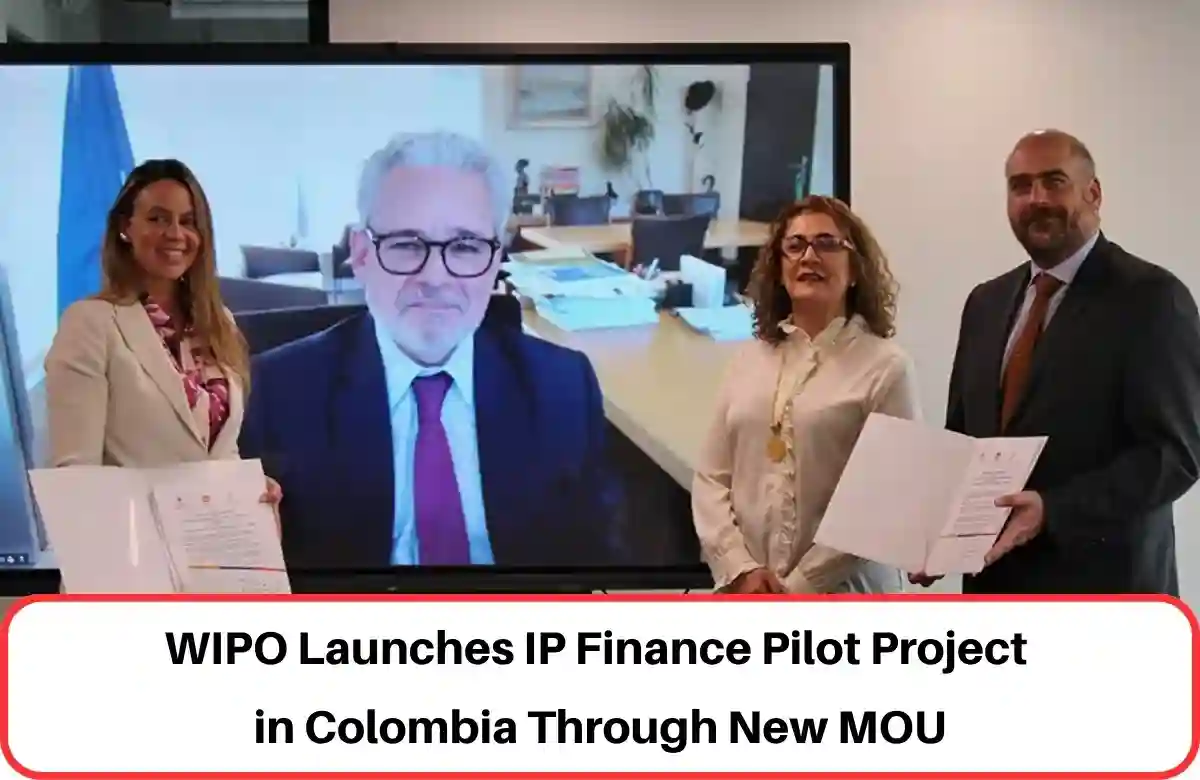
The World Intellectual Property Organization has taken a major step to integrate intangible assets into commercial banking. On June 3, 2026, the organization signed an agreement WIPO Finance Pilot Project in Colombia. This initiative is formalized through a WIPO memorandum of understanding signed in Bogotá. The agreement sets up a trilateral framework between the international agency, the National Planning Department of Colombia, and Banco Itaú. Why does this matter? It addresses a major flaw in traditional banking, where patents and trademarks are ignored during corporate credit risk assessments. By building clear legal pathways, the WIPO Colombia partnership helps innovative businesses secure debt capital using their intellectual property portfolios as financial collateral.
The Legal and Structural Framework of the WIPO Memorandum of Understanding
Everything relies on the formal text of the executed WIPO memorandum of understanding. In international IP administration, a memorandum of understanding serves as a structured legal instrument. It outlines the responsibilities, resource allocations, and boundaries for all signatories.
Under this framework, the three entities have split their legal and administrative obligations:
- The World Intellectual Property Organization: We see this entity providing technical legal expertise, asset valuation systems, and risk assessment frameworks.
- The National Planning Department of Colombia: This public body keeps the project aligned with national economic policies and monitors public compliance.
- Banco Itaú: As the private commercial banking partner, it provides the banking infrastructure, runs the tests on real corporate loan portfolios, and evaluates credit risk.
But it’s not just about paperwork. This legal division ensures that the WIPO IP Finance Pilot Project in Colombia moves smoothly from theory into daily banking operations.
Read Also: JPO Participation in the 148th Annual Meeting of INTA: Key Highlights and Insights
Overcoming Commercial Banking Obstacles Through the WIPO Colombia Partnership
The main goal of the WIPO Colombia partnership is to fix a legal and financial problem that stops corporate growth. Traditional banking models look at physical collateral. They want real estate, machinery, or inventory. But modern innovative businesses hold most of their value in intangible IP assets, like software, industrial designs, and brands.
Traditional banks lack secure risk assessment tools to judge these assets. Because of this, small and medium enterprises face constant loan rejections. This partnership changes that. By blending international legal standards with local financial operations, the organizations are creating clear technical guidelines. These rules allow bank underwriters to identify, verify, and value intellectual property assets during risk reviews with high legal certainty.
Practical Goals of the WIPO IP Finance Pilot Project in Colombia
The operational phase of the WIPO IP Finance Pilot Project in Colombia focuses on real-world financial implementation. The participants want to build reproducible tools that you can use across the wider financial sector.
The targets for this pilot project include:
- Asset Identification and Legal Verification: Developing strict banking protocols to check the legal validity, ownership status, and registration parameters of a borrower’s intellectual property.
- Capacity Building for Financial Underwriters: Running technical training programs for risk officers to build confidence when evaluating intangible property risk.
- Empirical Data Generation: Documenting real case studies and credit outcomes to build an evidentiary basis for future regulatory frameworks.
By meeting these benchmarks, the project will prove that intellectual property works as reliable collateral. And the legal tools refined in Colombia can soon serve as a model for other nations looking to modernize their economies.
Read Also: Google Defends Trademark Keyword Advertising Policy After Delhi High Court Hindware Judgment