
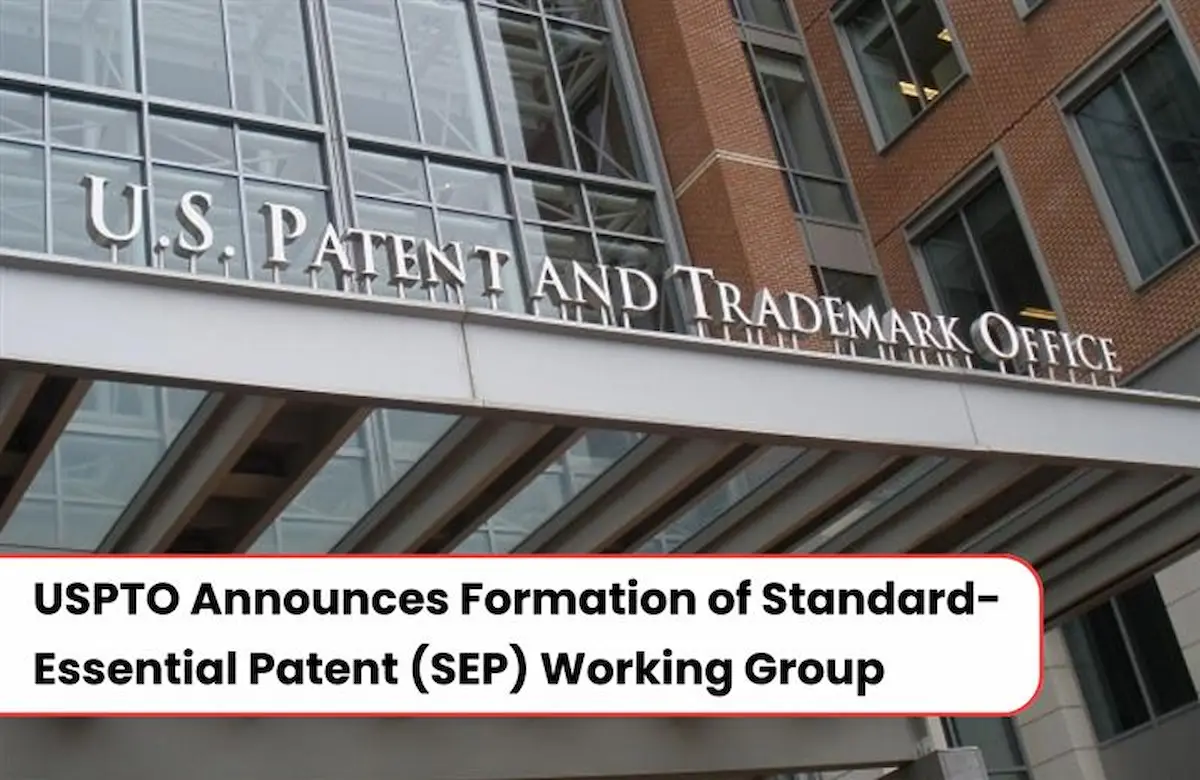
The junction of Intellectual Property and industry standards has become a high-stakes battleground in a time when global connection is the foundation of the economy. The U.S. Patent and Trademark Office (USPTO) recently declared the creation of the USPTO New SEP Working Group in recognition of the urgent need for clarification in this complicated environment. This tactical endeavor represents a major shift in the United States’ approach to striking a balance between providing incentives to inventors and maintaining the availability of core technology for broad adoption.
Defining the High Stakes of Standard Essential Patents in a Connected World
In terms of intellectual property, Standard Essential Patents are unique. They stand for technologies like 5G, Wi-Fi, or Bluetooth that are absolutely required to achieve a particular technical standard. Any business looking to produce items that are compatible with a technology that has become a “standard” must use the patented invention. The patent holder has tremendous influence over other members of the industry because the invention is “essential,” but they also deserve a return on their R&D expenditure. There is a unique tension as a result.
To help traverse these confusing waters, the USPTO New SEP Working Group was recently established. By concentrating on the intricate details of how these patents are licensed and enforced, the group hopes to prevent any one party from stifling innovation through “hold-out,” in which implementers refuse to pay fair rates for used technology, or “hold-up,” in which patent owners demand excessive royalties after a standard is adopted. The objective is to create an atmosphere free from ongoing legal issues so that the next generation of smart devices and infrastructure may thrive.
A Unified Strategy to Promote Transparency and Predictability for Inventors
One of the key motivations for the USPTO’s announcement is the critical requirement for transparency within the SEP ecosystem. Currently, evaluating whether patents are actually fundamental to a standard is a tough and subjective task. This lack of clarity frequently leads to “over-declaration,” in which corporations claim that thousands of patents are required only to strengthen their bargaining leverage. This results in a “royalty stack” that might make it exceedingly costly for small enterprises to enter the market.
The SEP Working Group is entrusted with creating policies that promote more disclosure and more impartial judgments of essentiality. The USPTO expects that by creating a more predictable structure, startups and independent inventors would gain the confidence they need to create. When the laws of motoring are clear, businesses may spend less time in court and more time in the lab, fueling the technical advances that define the twenty-first century.
Restoring Robust Remedies and Clarifying the Rights of Patent Holders
The new USPTO New SEP Working Group’s purpose includes restoring the status of “robust and predictable patent remedies.” In the past few years, the SEP ecosystem has become more hostile to inventors, with some claiming that license rates have been deliberately reduced. The USPTO, led by Director John Squires, is suggesting a shift toward more vigorous implementation of exclusionary rights. This includes campaigning for the availability of preliminary injunctions in district courts and exclusion orders from the International Trade Commission (ITC).
The agency contends that typical monetary damages are frequently insufficient to make up for Patent Infringement since patents are intrinsically hard to value. The USPTO hopes to prevent “breakthrough innovations from remaining stranded in laboratories” by strengthening the availability of injunctions. This change aims to protect everyone, from Fortune 500 behemoths to “garage inventors,” guaranteeing that your intellectual property rights will be vigorously protected if you develop the technology that drives a worldwide standard.
Strengthening Global Cooperation and American Leadership with USPTO New SEP Working Group
Technology standards are the language of global trade, which is rarely limited to a single border. The USPTO’s new working group sends a strong signal to the international world that the United States intends to lead, rather than follow, in patent reform. This organization will collaborate with international peers to standardize licensing methods while the European Union creates its own SEP legislation. By advocating for a rules-based framework, the USPTO hopes to prevent a “patchwork” of contradictory global laws, allowing American 6G and IoT inventions to flow effortlessly across international markets without encountering a wall of litigation.
Protecting the Future: What the USPTO New SEP Working Group Means for Startups and Small Businesses
The “little guys” in the tech world will likely feel the most profound impact. A single SEP IP Infringement lawsuit can kill a tiny startup. Historically, standard-setting organisations (SDOs) have been led by large firms with the means to navigate complex worldwide meetings. The Working Group intends to level the playing field by making it easier for small and medium-sized businesses (SMEs) to participate. The USPTO is decreasing the barrier to entry by opening up new channels of communication and boosting predictability in license discussions, making sure the next wave of AI-driven innovations is not reserved primarily for those with the most money.