
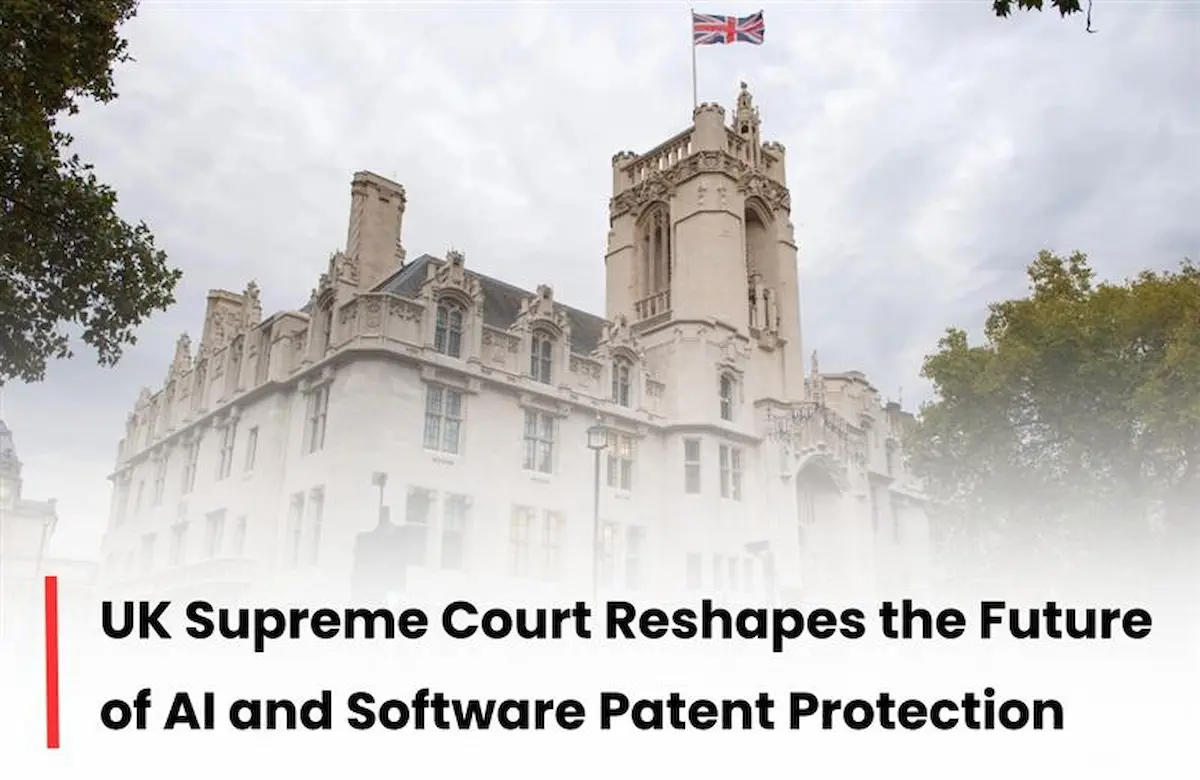
The legal framework governing digital innovation has reached a transformative juncture following the recent UK Supreme Court patent judgment in the case of Emotional Perception v. Comptroller General of Patents, Designs and Trademark. This decision represents a decisive move away from nearly two decades of restrictive judicial interpretation regarding the eligibility of software and Artificial Intelligence (AI) for patent protection. By realigning the British approach with the standards of the European Patent Office (EPO), the Court has fundamentally reshaped the requirements for IP protection within the technology sector.
Abandoning the Aerotel Methodology
For several years, the UK Intellectual Property Office (UKIPO) and national tribunals utilized the four-stage assessment established in Aerotel Ltd v Telco Holdings Ltd [2006]. This framework required examiners to isolate the specific contribution of an invention and evaluate whether that contribution resided entirely within excluded categories, such as “programs for computers.” Under the logic of previous UK Supreme Court patent ruling applications, numerous AI-based innovations were refused because they were deemed to lack a technical character independent of the underlying software code.
In this milestone judgment, the Supreme Court concluded that the Aerotel framework was founded upon a misconstruction of the European Patent Convention (EPC). The Court’s findings included:
- The previous methodology did not represent a consistent implementation of international treaty obligations.
- A broader interpretation of the term “invention” is essential to accommodate contemporary advancements in machine learning.
- The UK must now adopt a standard where the presence of physical components prevents a claim from being automatically dismissed as excluded subject matter.
Read Also: WIPO Launches its First IP Management Clinic in the Philippines
The Hardware Integration Standard and AI Eligibility
The core of this UK Supreme Court patent judgment is the principle that if a patent claim utilizes any form of physical hardware, it essentially avoids the threshold prohibition against patenting software “as such.” In the specific instance of Emotional Perception, which concerned an Artificial Neural Network (ANN) designed for semantic media suggestions, the Court observed that the system functioned through hardware in both its physical architecture and the computer executing the software model.
Consequently, the Court determined that while an ANN may be categorized as a computer program in a general sense, it does not fall under the statutory exclusion when it is implemented via hardware. This distinction is vital for future Patent Filing strategies, as it effectively lowers the barrier for AI-driven inventions to be recognized as eligible subject matter during the initial examination phase.
Distinguishing Technical and Non-Technical Elements
The UK Supreme Court patent ruling introduces a refined procedural step for assessing patentability Search. Before the UKIPO evaluates traditional criteria such as novelty and inventive step, it must now perform a specific analysis to:
- Partition the invention’s features into “technical” and “non-technical” classifications.
- Ensure that the assessment of an “inventive step” is based solely on features that provide a technical contribution.
- Synchronize the domestic definition of “technical character” with the EPO’s G 1/19 (Bentley Systems) precedent.
This procedural shift ensures that while the entrance requirement for patenting software is now more accessible, the ultimate standard for securing a granted patent remains stringent. The UKIPO is now tasked with re-evaluating whether the technical attributes of the Emotional Perception ANN offer a non-obvious solution to a specific problem.
Impact of UK Supreme Court Patent Judgment on IP Litigation and Corporate Strategy
This convergence of UK law with European practice carries significant weight for Patent litigation. Historically, the divergence between the UKIPO and the EPO created a fragmented landscape that increased costs and uncertainty for entities managing international portfolios. This UK Supreme Court Patent Judgment provides a necessary level of harmonization, minimizing the likelihood of contradictory outcomes across different regions.
For innovators in the AI space, the ruling necessitates several strategic updates:
- Expanded Patent Filing Scope: Software developers can now pursue protection for AI architectures that were previously considered unpatentable, provided the claims are structured to highlight hardware utilization.
- Strengthened IP Protection: The ruling provides a clearer pathway for protecting the “black box” elements of AI, provided they solve a technical challenge.
- Predictability in IP Litigation: Legal practitioners can now draw upon a vast body of EPO case law to argue the technical merits of software inventions in UK courts.
Conclusion
The UK Supreme Court patent judgment is a significant victory for the software industry. By replacing the Aerotel test with a more inclusive hardware-based standard, the Court has cleared a major path for AI developers seeking IP protection. This UK Supreme Court patent ruling ensures the United Kingdom remains a premier destination for technological investment, providing a legal environment that understands the technical essence of modern software engineering. Moving forward, the focus of legal disputes will migrate from basic eligibility to the complex analysis of technical inventive steps.
Read Also: Anthropic vs Anthropic: Karnataka Startup Files Trademark Suit Against US AI Company