
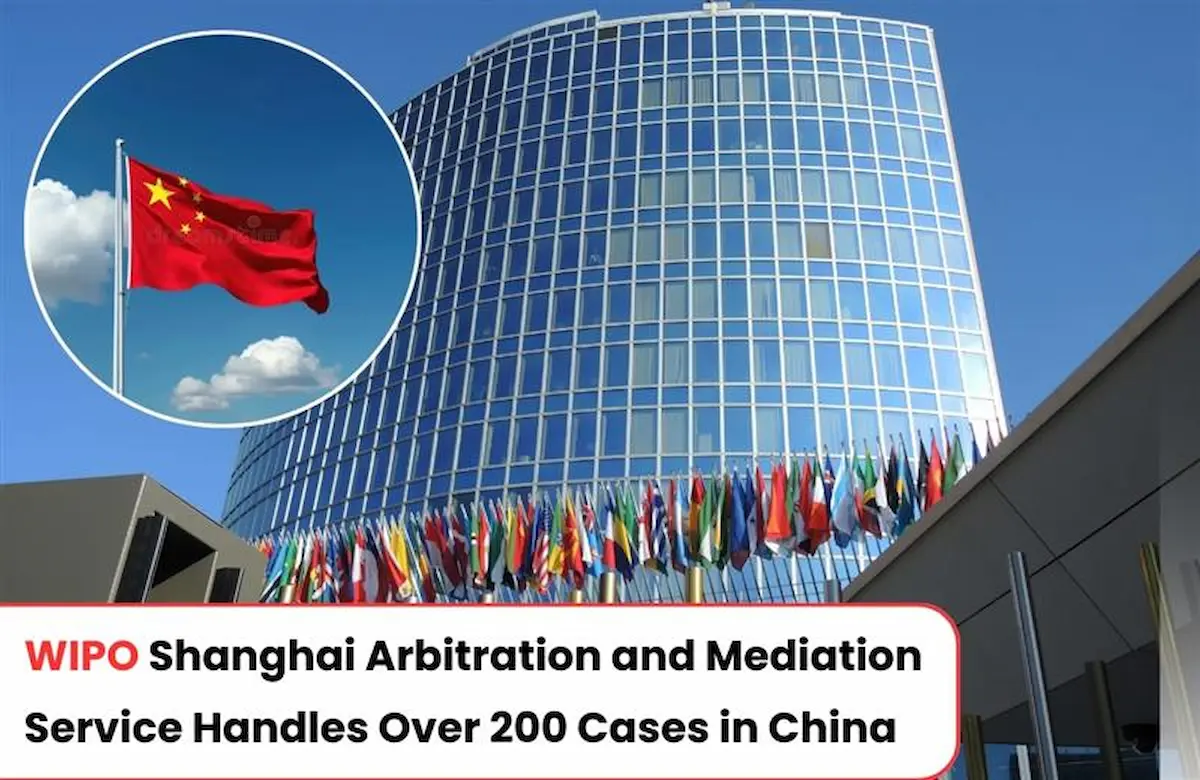
The WIPO Arbitration and Mediation Shanghai Service achieved an important milestone in its operational history, having handled 220 foreign-related WIPO China IP cases as of December 31, 2025. Since its launch in the China (Shanghai) Pilot Free Trade Zone in October 2020, the service has served as a specialized arena for resolving complicated international legal problems that fall outside the scope of typical IP litigation. By leveraging alternative dispute resolution (ADR) processes, the Shanghai Service allows for the effective administration of disputes involving multi-jurisdictional rights holders, ensuring that global economic interests are protected within the Chinese legal system.
Statistical Analysis of Foreign-Related WIPO China IP cases Administration
Since the beginning, the Shanghai Service has managed a diversified portfolio of 220 cases, including arbitration, court-referred mediation, and party-initiated mediation. The data show a high level of procedural efficacy, with a settlement rate of around 60% in cases where a mediator was appointed. This success rate highlights the effectiveness of ADR as a main tool for IP protection, allowing firms to avoid the lengthy timescales and high costs associated with formal IP litigation. Trademark disputes make up 58% of the cases, followed by copyright and digital content at 22% and patent-related issues at 14%.
The Increasing Role of Court Referrals in Mitigating IP Infringement
The Shanghai Service had a 42% increase in court-referred mediation of WIPO China IP cases in 2025 compared to the year before. Chinese judicial authorities, including the High People’s Courts of Shanghai, Fujian, Hainan, Guangdong, Chongqing, and Sichuan, referred 68 foreign-related mediation cases. This increase indicates the growing integration of international ADR frameworks with the Chinese judiciary. By submitting prospective IP infringement cases to WIPO mediation, the courts provide plaintiffs with a neutral venue for amicable resolution, relieving the burden on the public justice system while maintaining strict standards for intellectual property enforcement.
Diversification of Industry Sectors and International Participant Profiles
The Shanghai Service handles WIPO China IP cases in a wide range of economic sectors, demonstrating the worldwide nature of the current intellectual property business. The luxury goods and fashion industries accounted for 40% of all instances, followed by the entertainment and information technology sectors at 17% and 11%, respectively. Furthermore, the parties to these conflicts came from 19 different jurisdictions, including the United States, Germany, Japan, and the United Kingdom. This international involvement demonstrates that the Shanghai Service is a reliable institution for global entities wishing to address Patent infringement claims through a neutral, international non-profit organization.
Accessibility of Specialized Dispute Resolution for Small and Medium-Sized Enterprises
Demographic data on the participants demonstrates that the WIPO Arbitration and Mediation Shanghai Service is easily accessible to a wide range of parties. Small and medium-sized enterprises (SMEs), who often lack the financial means required for protracted IP litigation, accounted for about 49% of the parties served. Individual rights holders made for 14% of all users, while large organizations accounted for 37%. By providing time- and cost-effective ADR solutions, the service ensures that enterprises of all sizes can achieve effective IP protection and defend their intellectual assets from illegitimate exploitation on an international scale.
Future Implications for the Global Framework of IP Protection and ADR
The success of the Shanghai Service as the first international arbitration institution approved to conduct foreign-related IP dispute resolution in China signifies a major development in the regional legal landscape. The ongoing collaboration with provincial High People’s Courts provides a standardized pathway for the resolution of international disputes through WIPO Mediation. This cooperative model streamlines the process for addressing IP infringement and strengthens the stability of the international intellectual property ecosystem. As more jurisdictions utilize these specialized services, the global reliance on high-stakes IP litigation may shift toward more collaborative and expert-led resolution strategies.