
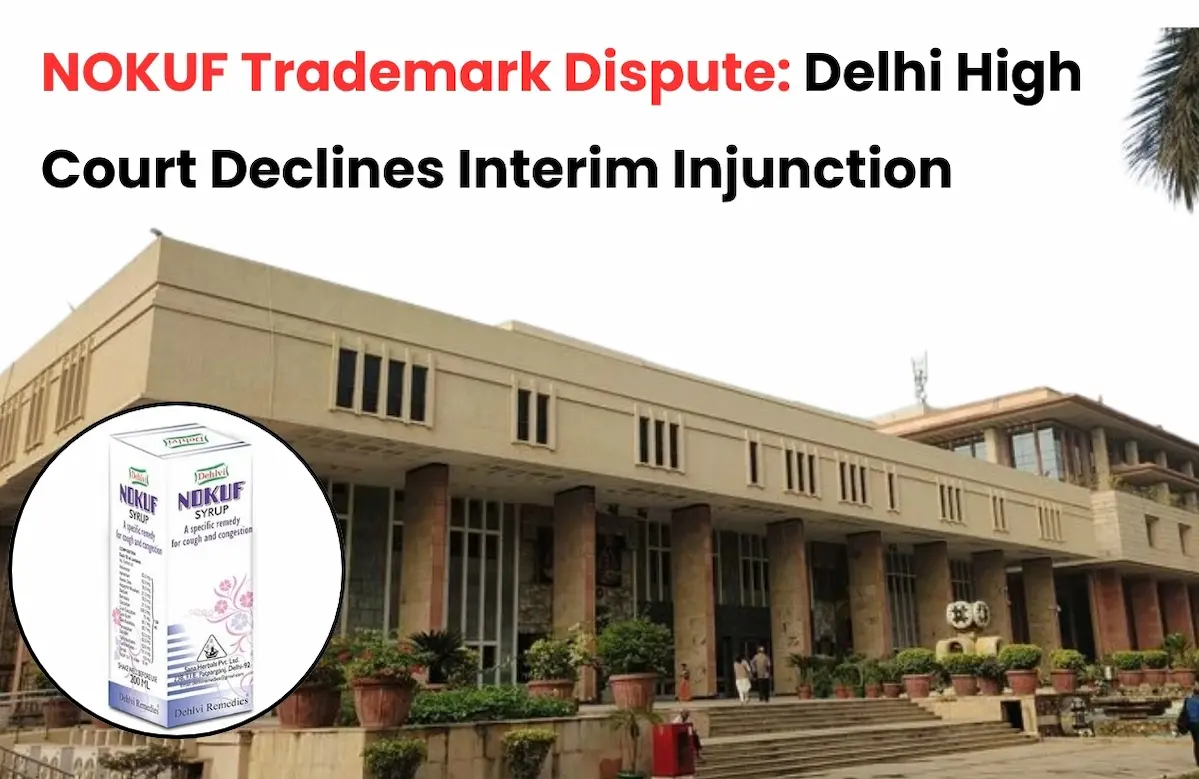
The conflict between comparable-sounding brand names frequently results in high-stakes IP litigation in the complicated realm of intellectual property. The Delhi High Court heard about the NOKUF Cough Syrup Trademark case on January 5, 2026. The court’s refusal to grant an injunction against the city-based Ayurvedic medication company Dehlvi Remedies provides an intriguing glimpse into how judges establish a balance between market competition and Patent protection. For businesses negotiating the complexities of trademarks and the larger field of pharmaceutical intellectual property, including how brands engage with the ideas of a patent and proprietary formulations, this decision is an essential case study.
The Legal Tug-of-War Over the NOKUF Cough Syrup Trademark Case
In an attempt to stop Dehlvi Remedies from using the term “NOKUF” for its cough medication, Sana Herbals Private Limited filed a lawsuit for IP infringement. The plaintiff claimed that the defendant’s use of the mark was confusing to customers since it was confusingly similar to their own “NOKUFSYRUP.” The name of a product is frequently its most precious asset in the pharmaceutical industry, and for every industry, where brand recognition is important to be examined closely as a chemical patent. The plaintiff claimed that the competing product’s phonetic and visual similarity constituted trademark infringement and requested a temporary injunction to prevent its sale.
Prior Use Wins the Day for the Ayurvedic Drug Maker
Justices C. Hari Shankar and Om Prakash Shukla of the Delhi High Court’s Division Bench identified a crucial weakness in the plaintiff’s case: the timeframe. Long before Sana Herbals existed, Dehlvi Remedies demonstrated that they had been utilizing the “NOKUF” mark since 1994. In contrast to patents, which are typically awarded to the first applicant, trademark rights in India frequently depend on “prior use.” The plaintiff’s request for temporary relief was rejected by the court due to the defendant’s long-standing use. This distinction plays a significant role in IP litigation because a brand’s past market presence may be more important than a later registration.
Examine “Deceptive Similarity” and the Significance of Professional Knowledge
The Delhi High Court considered more than just phonetic overlap when reviewing the NOKUF Cough Syrup Trademark case. Trademark disputes center on market confusion, whereas copyright infringement typically involves the unlawful duplication of artistic or literary works. While trademark law makes sure the public isn’t duped by branding, patents guarantee that a drug’s basic formula is shielded from illegal production. The court noted that doctors or pharmacists with professional judgment frequently administer cough syrups. Given that many medical names are derived from the conditions they treat (such as “Kuf” for cough), this specialist knowledge serves as a barrier against confusion.
Why the Court Refused to Grant an Interim Injunction
The idea that no single enterprise should be permitted to “appropriate” common descriptive terminology served as the basis for the denial of an injunction. The Delhi High Court stressed that the plaintiff must establish a “prima facie” case of irreversible loss for an injunction to be issued. In that NOKUF Cough Syrup Trademark case, the court clarified that an official action for IP infringement could not be pursued against another registered owner since both parties had registrations for their respective marks. This is similar to the reasoning behind patent law, which prohibits the abuse of private claims due to prior art and public knowledge.
Wider Implications for the Ayurvedic and Pharmaceutical Industry
For regional Ayurvedic producers, this decision represents a major win. It emphasizes how the judiciary is cautious of “trademark bullying,” in which larger enterprises attempt to drive out smaller rivals by utilizing industry jargon. This case serves as a warning to businesses now applying for patents on novel herbal compositions that, although your formula is protected by patent law, your brand name needs to be sufficiently unique to pass the “prior use” test in court. The connection between patent rights and trademark clarity will continue to shape the Indian IP litigation scene as the industry develops.