
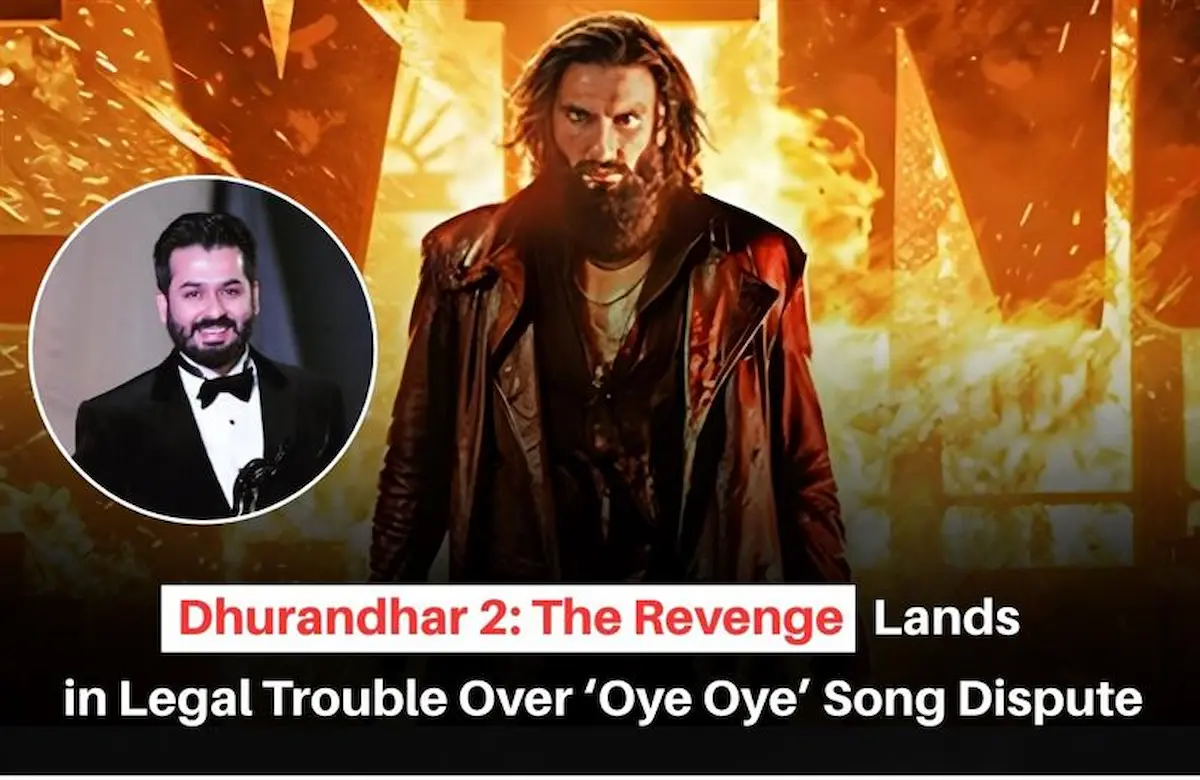
The Indian film industry is currently witnessing a high-stakes legal battle involving one of its most iconic musical legacies. Trimurti Films, the legendary production house founded by the late Gulshan Rai, has officially filed a case in court against Aditya Dhar’s B62 Studios. The crux of this dispute is the alleged unauthorized use of classic tracks in the newly released spy thriller, Dhurandhar 2. This Dhurandhar 2 Oye Oye Lawsuit highlights the growing friction between modern creative reimagining and the strict enforcement of intellectual property rights within Bollywood.
Understanding the Legal Basis of the Dhurandhar 2 Copyright Case
The legal action initiated by Trimurti Films is grounded in the protection of cinematic assets that have defined Hindi cinema for decades. According to the plaintiff, B62 Studios utilized portions of iconic tracks without securing the necessary master rights or synchronization licenses from the original copyright holders. Trimurti Films contends that, as the original producers of the films from which these songs originate, they hold exclusive control over how these works are reproduced or adapted in modern cinema.
The Dhurandhar 2 copyright case serves as a stern reminder to modern filmmakers that nostalgia cannot be leveraged at the cost of legal compliance. When a production house integrates legacy content into a new project, they must navigate the intricate web of licensing agreements. Failure to do so often results in a claim of copyright infringement, which can lead to judicial interventions, stay orders, or heavy financial penalties that can derail even a high-budget project’s release schedule.
Read Also: Ahmedabad Court Issues Injunction Against Rebel Foods in ‘Honest’ Trademark Row
Investigating the Famous Dhurandhar 2 Oye Oye Lawsuit and its Legacy
At the heart of this litigation is the track Tirchi Topiwale, popularly known as Oye Oye. This song is more than just a melody; it is a cultural phenomenon from the 1989 blockbuster Tridev. The Dhurandhar 2 Oye Oye lawsuit has gained immense public attention because the track remains a staple of Indian pop culture. Trimurti Films argues that the distinct rhythm and lyrical hooks of the song were used in the Dhurandhar 2 track titled Rang De Lal without a formal contract or payment of royalties.
In the Dhurandhar 2 Oye Oye lawsuit, the primary legal question is whether the adaptation constitutes a transformative use or a direct violation of the original owner’s rights. Trimurti Films maintains that the unauthorized adaptation of such a legendary track diminishes the commercial value of the original work. By bypassing the rightful compensation due to the original owners, the makers of the sequel have found themselves at the center of a significant legal storm that could impact the film’s distribution.
Read Also: Delhi HC Halts Sanjay Dutt-Backed ‘Godfather’ Whisky Launch in Trademark Dispute
Why Hum Pyar Karne Wale and Rang De Lal are Central to the Lawsuit
The legal complaint filed by Trimurti Films is comprehensive, citing multiple instances where their intellectual property was allegedly misappropriated. Specifically, the lawsuit mentions the unauthorized inclusion of the romantic ballad Hum Pyar Karne Wale and the energetic Rang De Lal. The plaintiff asserts that these songs were utilized to capitalize on the audience’s emotional connection to the originals, yet the producers failed to finalize the necessary paperwork before the film’s promotion began.
Including Hum Pyar Karne Wale and Rang De Lal in the legal filings suggests that the infringement is not an isolated oversight but a broader creative choice that lacked legal backing. In the world of high-budget cinema, using a melody as iconic as Hum Pyar Karne Wale requires clear clearance from the copyright holder to avoid IP litigation. By failing to secure these, B62 Studios has opened the door for a massive copyright infringement claim that could see parts of the film’s audio being redacted or replaced entirely.
Key Arguments in the Trimurti Films vs Aditya Dhar Copyright Case
The litigation process in the Trimurti Films vs Aditya Dhar copyright case focuses on the specific actions taken by B62 Studios during the production of their film. Reports suggest that the makers of Dhurandhar 2 intended for these songs to serve as a bridge between generations, paying homage to the golden era of action cinema. However, Trimurti Films asserts that a tribute does not negate the requirement for a legal license or a formal agreement between the two production houses.
The Trimurti Films vs Aditya Dhar copyright case is particularly significant because it involves a director of Aditya Dhar’s stature, who is typically known for high production standards and attention to detail. The lawsuit alleges that despite the film’s massive scale, the production house neglected the fundamental step of securing rights for Hum Pyar Karne Wale and the various elements of the Tridev soundtrack. This perceived negligence has led to a formal complaint filed in court, seeking an injunction against the further commercial exploitation of the music.
Read Also: Ahmedabad Court Issues Injunction Against Rebel Foods in ‘Honest’ Trademark Row

How Copyright Infringement Impacts Modern Indian Film Production Standards
The occurrence of copyright infringement in a film that involves major stars and significant investment creates a ripple effect throughout the industry. It forces production houses to re-evaluate their legal departments and ensures that every piece of intellectual property, from a background score to a simple lyrical hook, is properly vetted. In the context of Dhurandhar 2, the allegation of copyright infringement has created a cloud of uncertainty regarding the film’s long-term availability on digital platforms.
Legal experts suggest that the protection of creative work is essential for the economic health of the film industry. When a company like Trimurti Films stands up for its rights regarding Rang De Lal or any other track, it reinforces the message that legacy content is not the public domain for other professionals to use at will. By addressing this through the judiciary, the industry establishes a precedent that respects the original creators and their financial interests while ensuring fair competition.
Potential Consequences and the Future of the Dhurandhar 2 Oye Oye Lawsuit
As the court proceedings continue, the outcome of the Dhurandhar 2 copyright case will likely set a benchmark for future disputes involving song remakes and samples. If the court finds B62 Studios liable for using Hum Pyar Karne Wale or Rang De Lal without permission, they may be forced to pay substantial damages or enter into an expensive retrospective licensing deal. This serves as a cautionary tale for all production houses currently planning remakes or sequels that rely on nostalgic elements.
The Trimurti Films vs Aditya Dhar copyright case emphasizes that the journey of a film from script to screen must be paved with legal diligence. While the audience continues to enjoy the high-octane action of Dhurandhar 2, the legal fraternity is watching how the court balances the rights of original creators against the creative freedom of new-age filmmakers. Ultimately, this case proves that in the world of cinema, the law is just as powerful as the art it seeks to protect.