
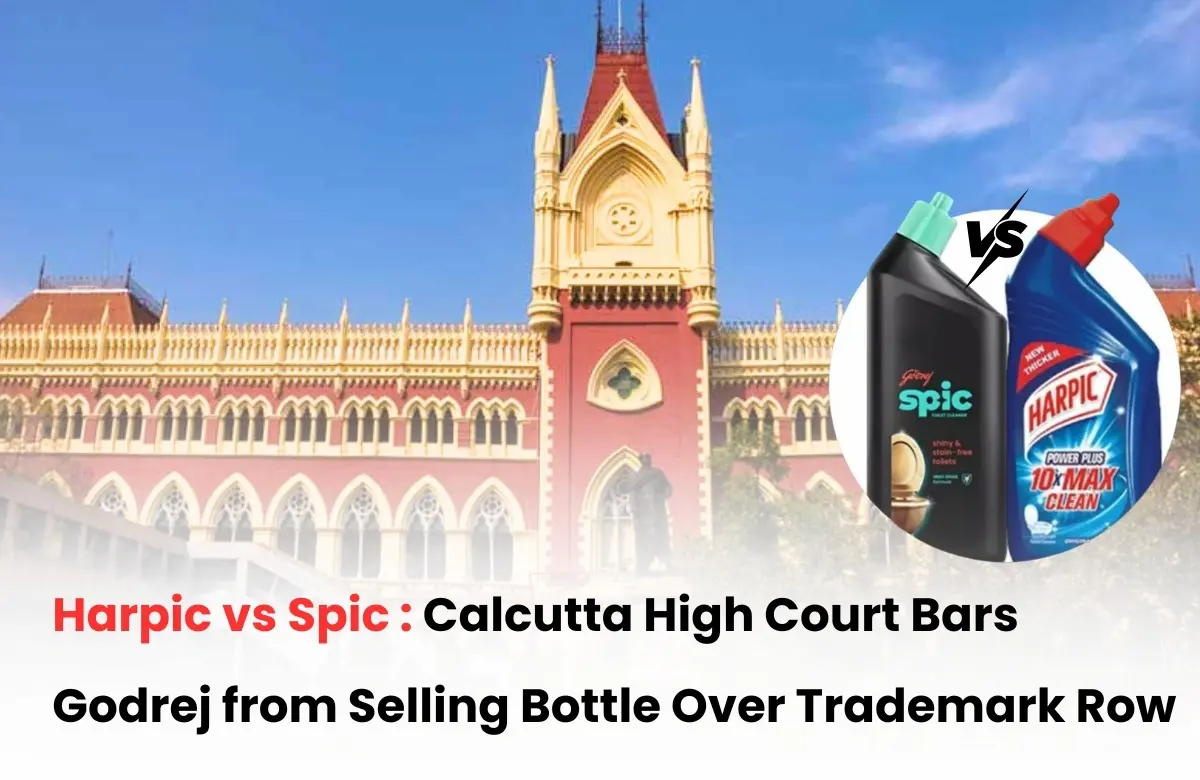
The protection of trade dress and product design has reached a significant milestone in Indian jurisprudence with a recent decision by the Calcutta High Court. In a notable legal battle involving two corporate giants, the court intervened to protect the visual identity of a household brand. The Harpic vs Spic Bottle trademark case serves as a critical reminder of how unique product packaging contributes to brand equity and consumer recognition.
Background of the Harpic vs Spic Bottle trademark Case
Reckitt Benckiser, the manufacturer of the well-known toilet cleaner Harpic, approached the Calcutta High Court seeking an injunction against Godrej Consumer Products Limited. The core of the grievance was not just the name of the product but the physical appearance of the container. Reckitt alleged that the new product from Godrej, sold under the brand name ‘Spic,’ utilized a bottle shape and color scheme that were deceptively similar to the registered shape of the Harpic bottle.
In the realm of IP litigation, the visual appearance of a product, often referred to as trade dress, is as protected as a brand name or a logo. Reckitt argued that they had spent decades establishing the distinctive “bent neck” bottle design in the minds of consumers. According to the plaintiff, the launch of ‘Spic’ in an identical container was a calculated move to benefit from the established reputation of Harpic.
Read Also: Tesla Loses CAFC Appeal in EV Charger Patent Dispute
The Allegations of Trademark Infringement
The primary legal contention in this matter revolved around Trademark Infringement and the passing off of goods. Reckitt highlighted that their bottle shape is a registered trademark under the Trade Marks Act of 1999. They provided evidence showing that the contours, the specific angle of the nozzle, and the overall silhouette of the Spic bottle mirrored their own design so closely that an average consumer might easily mistake one for the other.
When a company uses a design that is nearly identical to a registered one, it creates a “likelihood of confusion.” In this case, the court had to determine if the packaging from Godrej was a legitimate creative choice or an attempt to ride on the coattails of a market leader. The plaintiff maintained that the similarity was not coincidental but was intended to mislead the public into believing that Spic was either a variant of Harpic or was associated with the same parent company.
Read Also: WIPO Japan Office Organizes Special IP Dialogue with Sumitomo Chemical President
The Court Observations for Harpic vs Spice Bottle Trademark case
Justice Krishna Rao, presiding over the matter, examined the physical samples of both products. The court observed that the shape of the bottle is an integral part of the Harpic brand identity. Since the shape was duly registered under the law, Reckitt held exclusive rights to use that specific design for its category of products.
The court noted that in the Harpic vs Spic Bottle trademark Case, the “test of an unwary purchaser” is applied. This means the court looks at whether a person of average intelligence and imperfect recollection would be confused between the two products while standing at a retail shelf. The High Court found that the Spic bottle was indeed “slavishly copied” from the Harpic design.
Consequently, the Calcutta High Court passed an interim order restraining Godrej from manufacturing, selling, or distributing its toilet cleaner in the contested bottle shape. This injunction ensures that the status quo of the market is maintained and that the intellectual property rights of the plaintiff are not further diluted while the case proceeds to a final trial.
Implications for the Industry
The Harpic vs Spic Bottle trademark Case highlights the increasing importance of design registration in India. It is no longer enough for companies to protect their names and logos. In a crowded marketplace, the “get up” or the physical form of the product acts as a silent salesman. This ruling reinforces the idea that even functional shapes can acquire “secondary meaning” and deserve full legal Trademark and Patent protection.
Furthermore, this instance of IP Litigation demonstrates that the Indian judiciary is becoming increasingly vigilant against “look-alike” products. Companies are being encouraged to invest in original research and design rather than adopting aesthetics that are already synonymous with existing brands.
Read Also: USPTO and DOJ File Statement Emphasizing the Importance of Innovation Incentives
Conclusion
The decision by the Calcutta High Court to restrain Godrej is a victory for brand owners who invest heavily in creating a unique visual language for their products. By preventing the sale of the Spic bottle in its current form, the court has upheld the sanctity of registered designs.
For the average consumer, this Harpic vs Spic Bottle trademark Case ensures that they are not misled by deceptive packaging. For the corporate world, it serves as a stern warning that imitating the registered shape of a competitor is a clear path toward a Trademark Infringement lawsuit. As the legal proceedings continue, the industry will be watching closely to see how this case shapes the future of trade dress protection in India.