
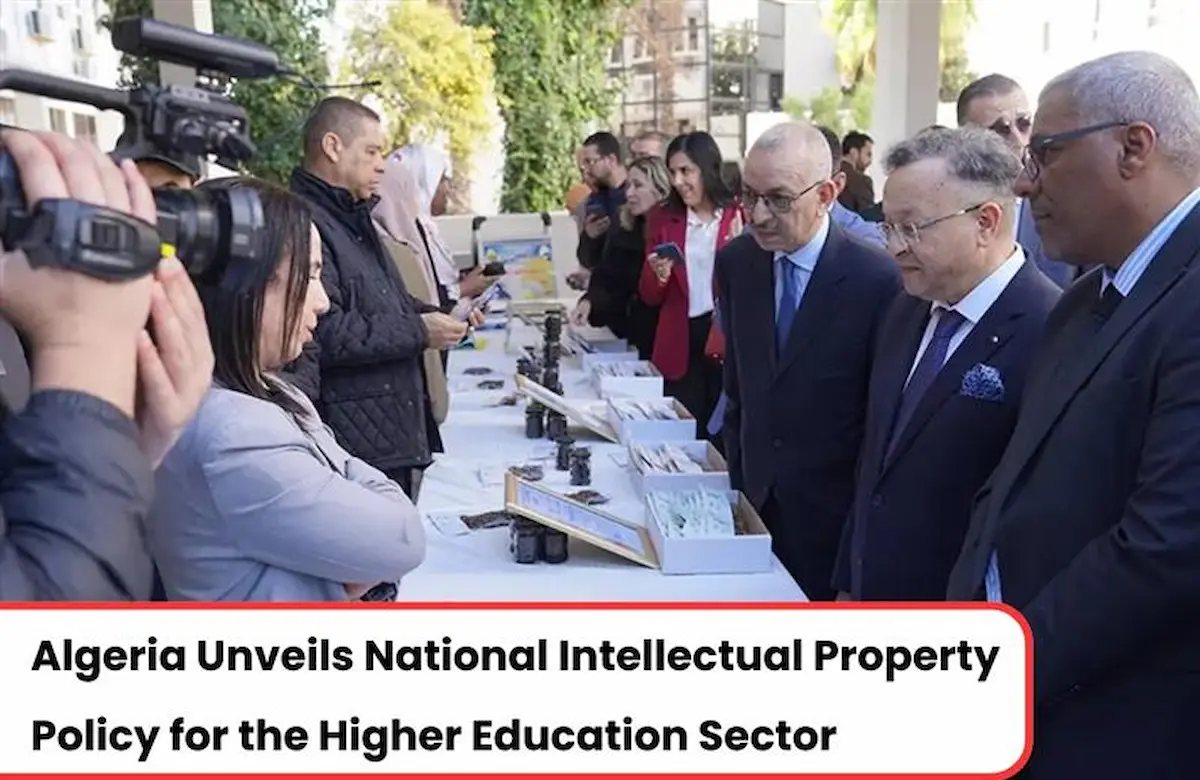
In a significant move toward fostering a knowledge-based economy, Algeria has officially launched a comprehensive national model for Intellectual Property (IP) policy specifically tailored for higher education and scientific research institutions. This initiative, developed in collaboration with the World Intellectual Property Organization (WIPO), aims to bridge the gap between academic innovation and commercial industrial application.
Algeria Launched IP Policy for a clear framework for the management of intangible assets. Algeria is positioning its universities as central hubs for economic development rather than just centers for theoretical learning.
Algeria Launched IP Policy: New Framework for Academic Innovation
The core of the Algerian National IP Policy for Universities is to provide educational institutions with a standardized set of guidelines. Historically, many researchers and students faced uncertainty regarding who owned the rights to a discovery made within a university laboratory. This lack of clarity often led to missed opportunities for patenting and commercialization.
Under the new strategy, the Ministry of Higher Education and Scientific Research seeks to provide a transparent legal structure. This structure defines the ownership of inventions, the distribution of royalties, and the specific procedures for disclosure. By clarifying these legal boundaries, the government ensures that IP Protection is woven into the fabric of the research process from day one. This proactive approach helps prevent future legal disputes over ownership and encourages a culture where researchers feel secure in their creative endeavors.
Encouraging Technology Transfer and Economic Growth
The transition from a research paper to a marketable product requires a robust legal foundation. The new national strategy emphasizes the creation of Technology and Innovation Support Centers (TISCs) across the country. These centers act as intermediaries, helping academics navigate the complexities of patent filing and trademark registration.
A primary objective of the Algeria National IP Policy for Universities is to encourage the creation of spin-offs and startups. When a university has a defined policy, it can more easily license its technologies to the private sector. This creates a revenue stream for the institution and provides the public with access to new medical treatments, engineering solutions, and digital technologies. Without strong IP Protection, private investors are often hesitant to fund university projects, fearing that their investments will not be legally secured against competitors.
Mitigating Risks through Legal Compliance
In the world of intellectual property, the threat of infringement is a constant reality. As Algerian universities begin to produce more high-value innovations, they must also prepare for the complexities of the global legal landscape. This includes understanding the mechanisms of IP Litigation, which can arise if a university’s rights are challenged or if an institution inadvertently uses third-party protected material.
The new strategy includes training programs for university staff to understand the legal risks associated with research. By educating the academic community on how to properly document their findings and conduct prior-art searches, the ministry aims to reduce the likelihood of costly IP Litigation. Learning how to defend intellectual assets in court or through arbitration is just as important as the act of invention itself. A university that is well-versed in legal enforcement is better equipped to protect its researchers and its financial interests.
Fostering an IP Culture in Higher Education
Beyond the technicalities of law and commerce, the Algeria National IP Policy for Universities represents a cultural shift. It moves the academic mindset toward “utilitarian research.” Students are now being encouraged to view their graduation projects not just as academic requirements, but as potential intellectual assets that require formal safeguarding.
The collaboration with WIPO ensures that the Algerian model aligns with international standards. This alignment is crucial for Algerian researchers who wish to seek patent protection in foreign markets. By adhering to global best practices, Algerian universities can participate more effectively in international research partnerships, knowing that their contributions are recognized and protected by a modern legal framework.
Read Also: WIPO Japan Office Organizes Special IP Dialogue with Sumitomo Chemical President
Conclusion: A Vision for the Future
The unveiling of this national strategy marks a turning point for Algeria’s intellectual landscape. By focusing on the Algeria National IP Policy for Universities, the state is providing the tools necessary for local talent to thrive on a global scale.
The integration of robust IP Protection protocols ensures that the fruits of Algerian ingenuity remain in the hands of those who created them. Furthermore, by preparing institutions for the realities of Trademarka and Patent Litigation and enforcement, the government is building a resilient system that can withstand the pressures of the modern economy. This clean and structured approach to intellectual property will undoubtedly serve as the foundation for Algeria’s future industrial and scientific sovereignty.