
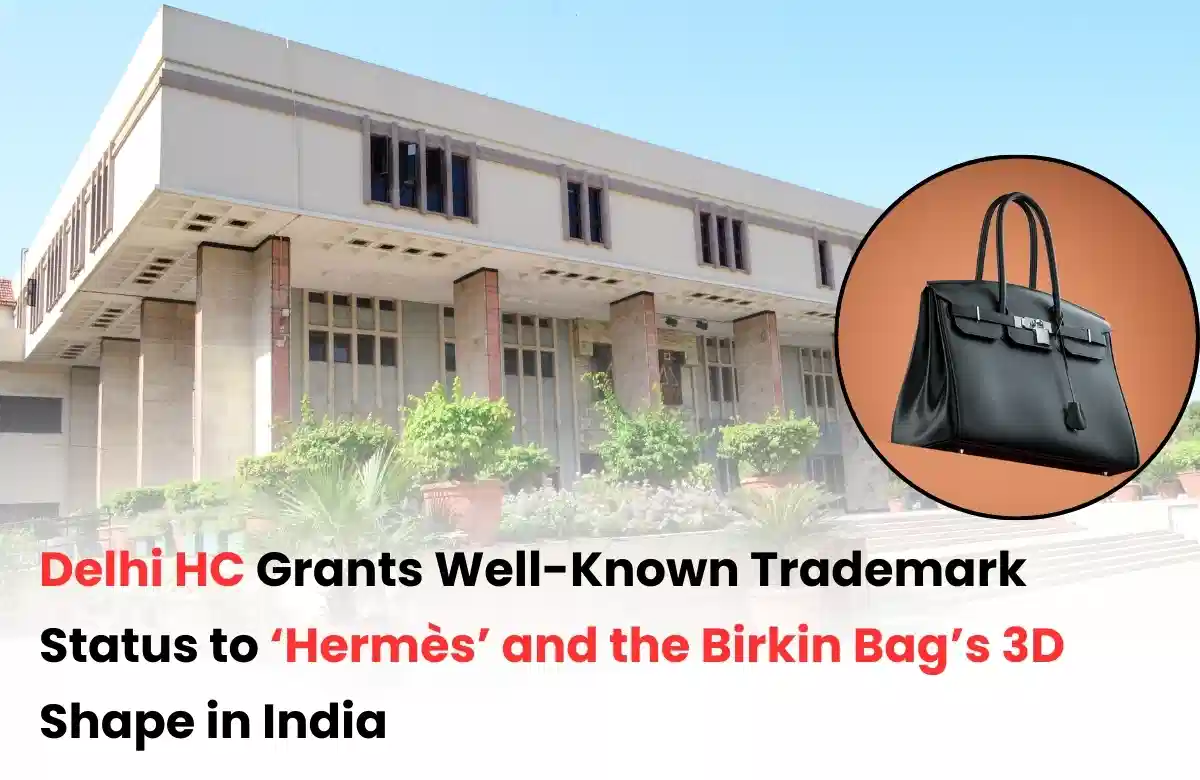
The Hermès Birkin bag is one of the most iconic and desired luxury handbags in the world, loved for its timeless design, exceptional craftsmanship, and exclusivity. Hermès Birkin Bag Trademark Case, and this time, it’s making headlines in India for a completely different reason. The Delhi High Court has officially declared the Birkin’s signature shape—along with three Hermès trademark—as “well-known marks” in the country. This decision came after Hermès sued an Indian company for selling look-alike bags online. Keep reading to find out what this ruling really means for the brand, how it could impact the luxury market, and also learn about the other latest IP news from India and all over the world.
How Did the Hermès Birkin Bag Trademark Case in India Begin?
Before understanding why the Delhi High Court ruled in Hermès’ favour, it’s important to know how the case even began. The issue started when Hermès International and its Indian arm noticed something odd — an Indian brand called Macky Lifestyle was using and promoting handbags that looked a lot like the iconic Birkin design. Seeing this as a threat to their trademark rights and reputation in India, Hermès filed a lawsuit initiating the Hermès Birkin Bag Trademark Case, accusing the company of selling and advertising Birkin-style bags online to ride on the brand’s global goodwill. To back up their claims, Hermès presented strong evidence, including the Birkin’s long history, its worldwide fame, global trademark registration, and the brand’s ongoing efforts to stop copycats.
Macky Lifestyle, however, denied making or selling such bags and said the images used online were simply taken from the internet. They also admitted that their business had already shut down and didn’t oppose Hermès’ requests. With this, the case shifted from just stopping an infringer to deciding whether the Birkin’s design and Hermès’ trademarks deserved “well-known” status under Indian law. After this, the case reached the Delhi High Court, and the case started proceeding.
Read Also: Whirlpool Files Patent Complaint to Stop Samsung and LG Microwave Imports
What Did the Delhi High Court Decide After Reviewing the Hermès Birkin Trademark Case?
Now let’s look at why the Delhi High Court ruled in favour of the Birkin. Once the case reached the Court, the judge took a deep look at whether the Birkin bag’s design and Hermès’ trademarks actually deserved stronger protection in India. Hermès came prepared with solid evidence showing the Birkin’s long global history, its massive reputation, official trademark registrations, and the brand’s ongoing fight against counterfeits worldwide. On the other hand, Macky Lifestyle told the Court that they never made or sold the alleged look-alike bags and said the pictures online were simply taken from the internet. They even admitted that their business had already shut down and didn’t challenge anything Hermès said. With no real dispute left, the Court shifted its focus to the bigger question—should the Birkin’s shape and Hermès’ marks be treated as “well-known” under Indian trademark law? After reviewing the brand’s goodwill, distinctiveness, and recognition among consumers, the Court decided that the Birkin bag and the Hermès name, and its stylised logos, all fulfilled the legal requirements. Because of this, the Delhi High Court officially declared these marks as well-known in India, giving Hermès stronger protection against anyone trying to copy or sell look-alike bags in the future.
Conclusion
The Delhi High Court’s ruling marks a big win for Hermès and a major moment for trademark protection in India. By recognising the Birkin bag’s shape and Hermès’ trademarks as well-known, the Court reinforced the importance of protecting iconic designs and safeguarding brand identity. Hermès Birkin Bag Trademark Case not only strengthens Hermès’ position in the Indian market but also sets a strong precedent for other luxury and creative brands looking to defend their uniqueness. As India’s IP landscape continues to evolve, rulings like this show a clear move toward stricter protection against copycats and greater respect for originality and craftsmanship.
Read Also: Trade Marks Registry Approves India’s First Olfactory Trademark for Rose-Scented Tyres