
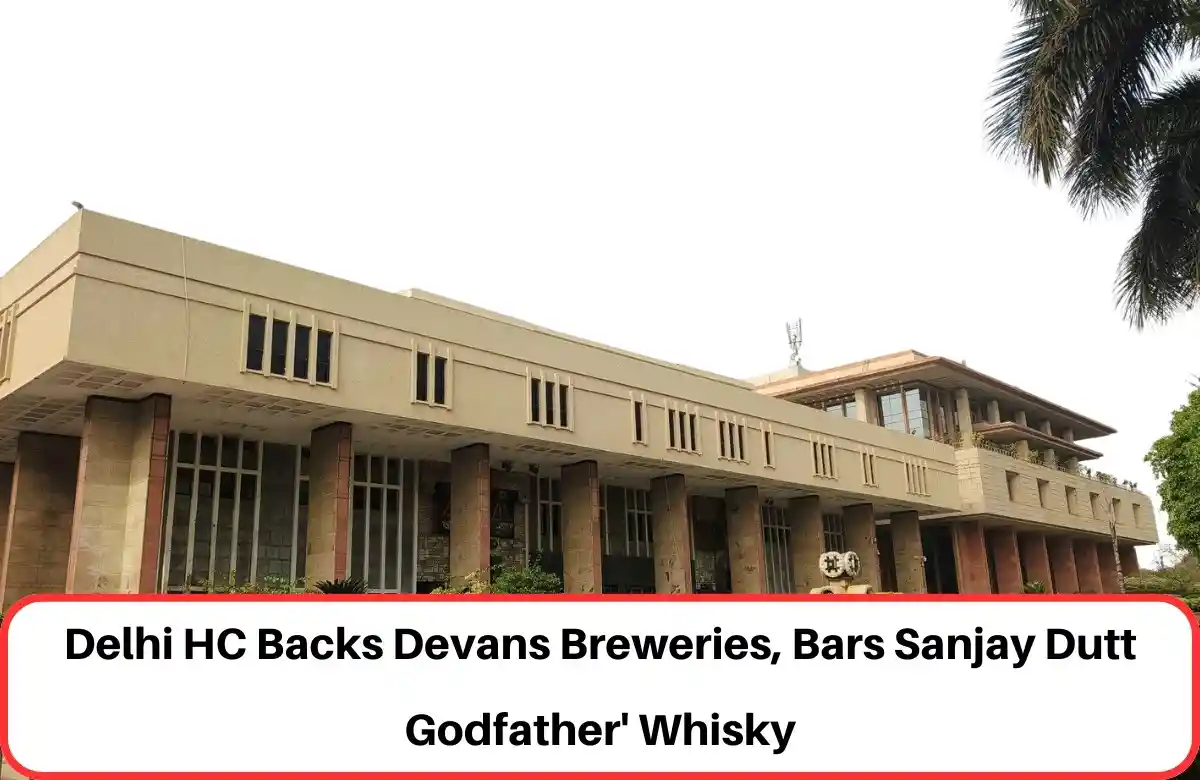
The Delhi High Court has granted an interim injunction in favor of Devans Modern Breweries Limited, restraining Cartel Bros Private Limited from using the “Godfather” or “Godfather’s” brand names for its alcoholic products. The defendant, backed by Bollywood actor Sanjay Dutt, planned to launch a new whisky variant commercially. But this legal intervention stops the release. In this high-profile intellectual property lawsuit, the plaintiff successfully established a prima facie case of trademark infringement. The court protected the plaintiff’s goodwill by ensuring that the Sanjay Dutt Godfather Whisky does not dilute a brand name that has existed for decades. Does a long-term trademark registration hold full legal enforceability against newer market entrants? This decision clarifies that it does. The Delhi HC Devans Breweries ruling settles vital statutory questions regarding classification, market channels, and the ongoing obligations of trademark proprietors. It’s a clear signal to the market. Amidst rising competition in the Indian liquor sector, the intense Godfather Whisky dispute highlights how strictly the judiciary protects registered corporate titles from deceptive similarity.
Direct Impact of The Delhi HC Devans Breweries Judgment on Product Manufacturing and Digital Marketing Channels
The order issued by Justice Tushar Rao Gedela places wide prohibitions on Cartel Bros Private Limited. Under the terms of this interim injunction, the Sanjay Dutt-backed company cannot manufacture, bottle, market, sell, advertise, or export any alcoholic products under the “Godfather” or “Godfather’s” names.
The legal restrictions extend far beyond physical manufacturing. The court ordered the immediate removal of all digital footprints associated with the proposed product launch. The explicit directives given by the court include the following actions:
- The immediate removal of all product listings from e-commerce platforms and mobile applications.
- The deletion of promotional videos, images, and marketing text from all social media channels controlled by the company.
- The removal of online advertisements and public announcements regarding the whisky launch.
- A complete halt to any fresh social media communications or digital amplification that utilizes the protected mark.
The court stated that allowing the digital content to remain online would cause irreparable harm to the original trademark owner. By cutting off both physical supply lines and online advertising, the court protects the commercial space from unauthorized brand exploitation while the main lawsuit proceeds to final adjudication.
The Legal Arguments Surrounding The Godfather Whisky Dispute and the Question of Deceptive Brand Similarity
The Godfather Whisky dispute centers on the core principles of trademark infringement, prior usage, and consumer confusion. Devans Modern Breweries Limited stated that it adopted the “Godfather” mark in the year 1984 for its beer products under Class 32 of the trademark classification. Additionally, the company holds valid registrations under Class 33 for other alcoholic beverages, which include spirits like whisky and rum. The plaintiff presented financial records showing a turnover of over 746 crore rupees for the financial year 2024 to 2025 to demonstrate its extensive market reputation.
In response, Cartel Bros Private Limited argued that they had modified their brand name to “The Glenwalk Godfather’s by Sanjay Dutt” to prevent direct identity issues. The defense argued that the name of the celebrity actor acted as the primary source identifier rather than the word “Godfather”. They also argued that the plaintiff had not actively sold whisky under that specific name for several years, which should reduce their claim of exclusivity over Class 33 products.
The High Court rejected the arguments of the defendant by applying standard intellectual property laws. The court ruled that the words “Godfather” and “Godfather’s” remained the most prominent and dominant features of the mark. The addition of a celebrity name or extra words did not alter the fact that the brand name was deceptively similar to the registered trademark of the plaintiff.
Read More: WIPO Launches IP Clinics in Lao PDR and Cambodia to Empower SMEs
Why Beer and Whiskey are Allied Products Under Intellectual Property Law, according to the Court
A major structural turning point in this lawsuit was whether beer and whisky could be viewed as competing items. The defense argued that the two products belong to different categories, have different pricing structures, and cater to different consumer preferences. However, the court ruled that these differences do not change the fundamental legal classification of the goods.
The court noted that both items are alcoholic beverages that move through identical trade channels and are sold at the same retail outlets. Furthermore, both products are governed by the exact same state excise laws and regulatory frameworks. Because of these overlapping operational environments, the court ruled that beer and whisky are allied and cognate products.
The court also addressed the non-use argument raised by the defense. It held that mere non-use of a registered mark does not automatically strip a proprietor of their legal protection. As long as the trademark registration remains valid on the official register and has not been removed through proper rectification proceedings, the owner retains the exclusive right to enforce it. The court concluded that allowing Sanjay Dutt Godfather Whisky to enter the retail chain would create a strong likelihood of consumer association, where buyers might falsely assume that the new whisky was produced by the makers of the original beer brand.