
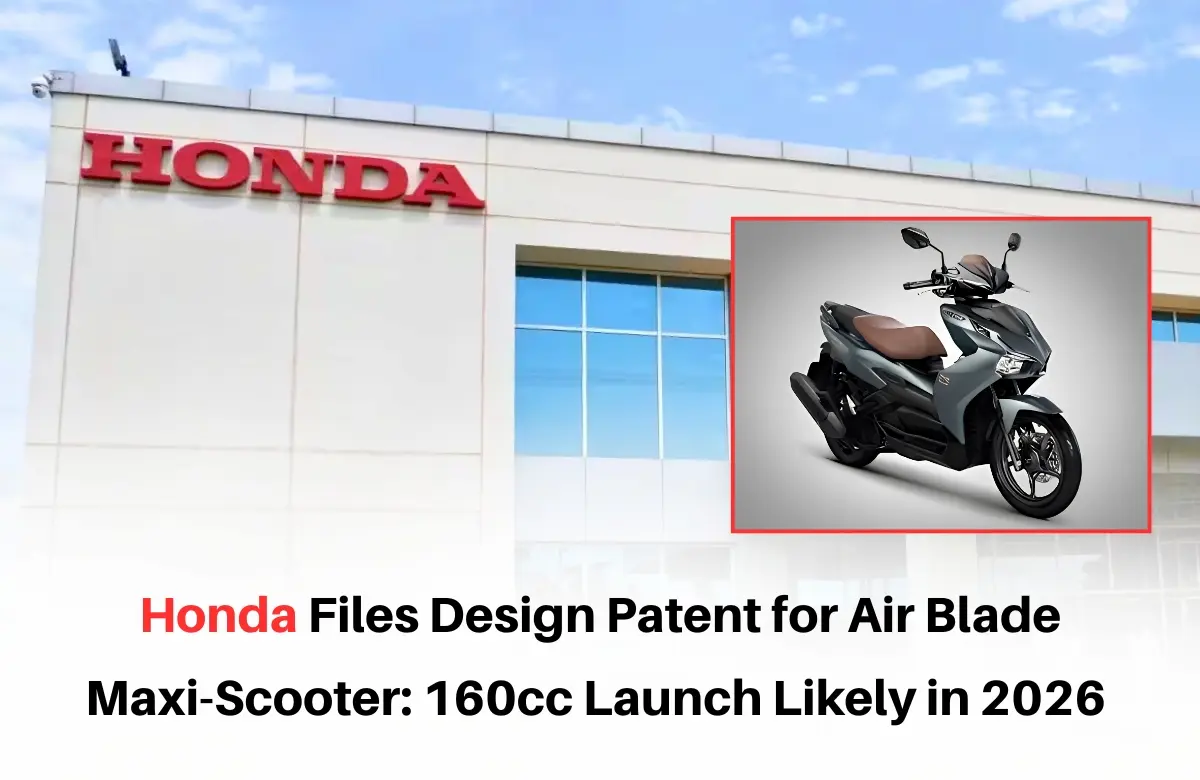
India’s two-wheeler market is shifting toward premium mobility. In a move to guard its intellectual property, Honda Motorcycle and Scooter India recently secured a design registration for a major international model. News that the Honda Air Blade maxi-scooter has been patented in India has caught the attention of both enthusiasts and legal professionals. This isn’t just about a potential launch. It’s a formal step to protect the visual identity of a vehicle that’s already a commercial success across Southeast Asia.
Why does a global corporation file a Honda Air Blade Design Patent? The decision usually stems from a need for long-term commercial security. It’s the primary way to establish IP Protection within the Indian jurisdiction. By registering this design, Honda ensures the specific look and feel of the maxi-scooter is recognized as its exclusive property. This stops competitors from releasing products with a “confusingly similar” appearance. In a market where brand look dictates sales, that protection is vital.
But don’t assume a patent means the bike will be in showrooms tomorrow. It’s a legal safety net. If a rival brand replicates the sharp body lines or the specific lighting setup, Honda has the grounds to start IP Litigation. These legal frameworks help maintain a competitive edge. Because of these filings, R&D investments remain shielded from unauthorized copying.
Analyzing the Unique Honda Air Blade Design Patent and Styling Elements
The technical details within the Honda Air Blade Design Patent show off a very sophisticated style. It moves away from the standard step-through designs we usually see on Indian roads. Instead, the Air Blade uses a backbone-style chassis. This design swaps the flat floorboard for a central tunnel that holds the fuel tank. The result? A more aggressive, motorcycle-like stance that sets it apart from utility scooters.
The specs in the Honda Air Blade Design Patent focus on aerodynamics and modern industrial art. You’ll notice integrated LED lighting and geometric body panels built for high performance. From a legal standpoint, these visual markers are the core of the company’s IP Protection. Keeping these proprietary elements exclusive is a requirement if Honda wants to keep its premium market position.
Read Also: Nokia Wins Against Acer and Asus Video Streaming Patent Lawsuits in UK Appeal
Legal Implications of IP Protection for Global Two-Wheeler Manufacturers
In the automotive world, IP Protection isn’t just paperwork. It’s a defense against design theft. The process surrounding the Honda Air Blade maxi-scooter, patented in India, shows how a company manages its global portfolio. By securing these rights, Honda keeps control of its brand. If a third party tries to sell a counterfeit or a “clone” model, Honda has the legal standing to take them to court.
Good IP Protection strategies help companies avoid the high costs of Patent Litigation. By setting clear ownership with a registered design, Honda draws a line for other manufacturers. It’s a proactive stance. It tells the market that the company will defend its rights. This is standard practice for any international entity looking to grow its footprint in India.
Technical Specifications and Performance Features of the Honda Air Blade
Beyond the legal talk of the Honda Air Blade Patent, the machine itself is a feat of engineering. Internationally, it usually carries a 125cc or 160cc liquid-cooled engine. These use Honda’s eSP+ technology to improve fuel efficiency and power. It also includes premium features like smart-key systems and digital screens.
The Honda Air Blade maxi-scooter, patented in India, might focus on looks, but the performance is what matters to the rider. The 160cc version offers power that rivals entry-level motorcycles. It’s versatile enough for city traffic or highway runs. When you combine high-end parts with a protected design, the product stays distinct in a crowded market.
Read Also: Shein Accuses Temu of Industrial-Scale Copyright Infringement in UK Court
Why Manufacturers File Patents to Avoid Future IP Litigation Risks
Filing a patent is about reducing the chance of IP Litigation down the road. Without a formal registration, proving you own a design during a court battle is incredibly difficult. By securing the Honda Air Blade Design Patent, Honda creates a public record of its original work. This document is the evidence needed to challenge anyone who mimics the Air Blade’s unique features.
IP Litigation is a massive risk. These battles can last years and cause heavy financial damage. By getting a patent early, Honda can settle disputes much faster. This legal certainty is good for the industry. It encourages real innovation instead of just copying. It keeps the marketplace fair.
Final Thoughts on the Future of Honda Maxi Scooters in India
The fact that the Honda Air Blade maxi-scooter, patented in India, is now on the books shows Honda is watching the local market closely. Whether or not it launches soon, the move proves that intellectual property is a pillar of corporate strategy.
By focusing on a strong Honda Air Blade Patent, the company has marked its territory. The mix of motorcycle performance and scooter comfort makes the Air Blade a unique find. As the Indian market matures, IP Protection and the prevention of IP Litigation will remain a priority for giants like Honda. For now, the registration ensures this design is recognized and defended by law.