
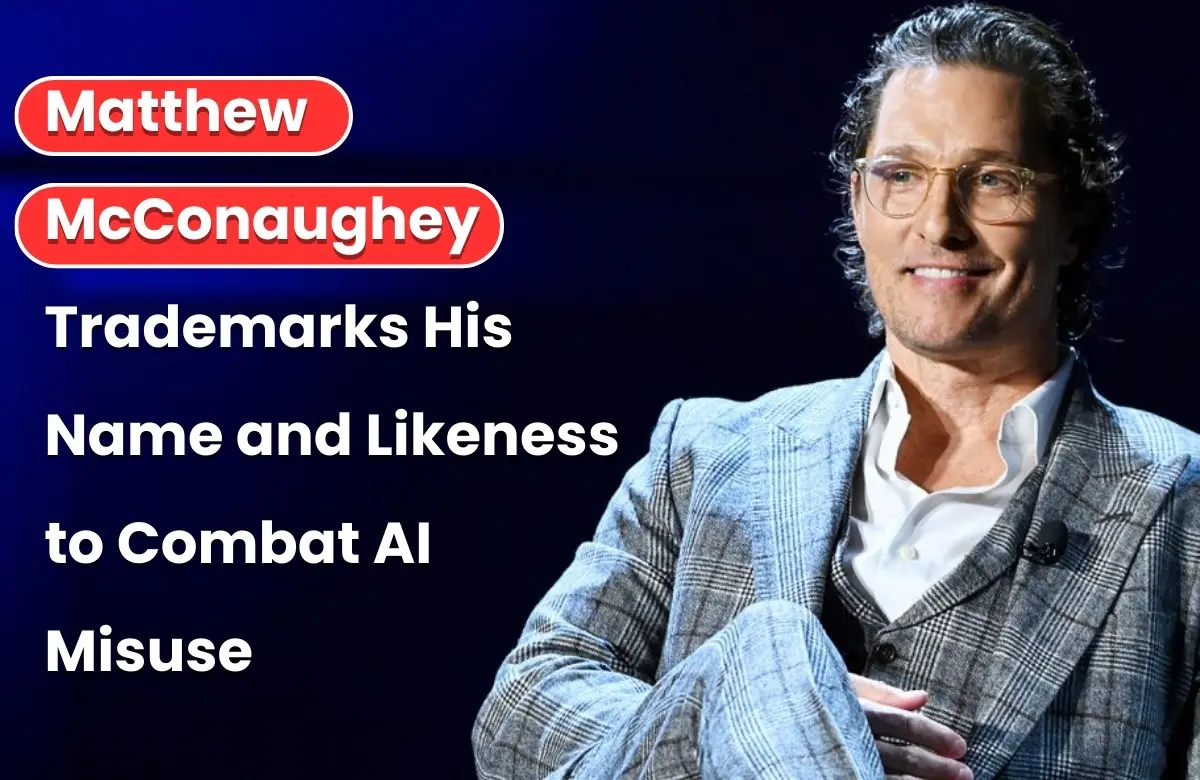
In the fast-changing field of generative artificial intelligence, the entertainment sector faces a unique challenge: the digital replication of human identity. Leading actors are increasingly concerned about the protection of their digital identities, rather than just their next appearance. Oscar-winning actor Matthew Mcconaughey trademark himself, driving this shift toward aggressive legal defense and stopping AI deepfakes. The Interstellar star has lately adopted a complete strategy to protect his voice and image, guaranteeing that his personal brand is still under his direct control in an era of realistic deepfakes.
How the Matthew Mcconaughey trademark helps to preserve celebrity identity
The core of Matthew Mcconaughey trademark legal strategy involves extensive trademark registration. Recently, reports have surfaced indicating that the actor secured eight distinct trademarks from the United States Patent and Trademark Office (USPTO). These filings specifically cover his name, his likeness, and even his world-famous voice. By registering these as trademarks, McConaughey is shifting the legal conversation from “right of publicity” to “brand protection.”
Trademarking a name or voice offers a strong enforcement weapon in the United States. His legal team may launch a claim for trademark infringement, which frequently has more immediate legal weight than privacy-related claims, if an unapproved AI-generated video utilizes his persona to promote a product. By taking this action, the How to Lose a Guy in 10 Days star will be able to successfully send takedown notices to platforms that post unapproved or misleading AI content.
Establishing New Industry Standards for Advanced IP Protection
Intellectual property (IP) protection for celebrities today goes much beyond production rights and movie scripts. It now includes the “essence” of the artist. McConaughey’s strategy views his character as a proprietary asset, similar to a patented idea or a company logo. This is especially important in a market where studios and advertisers are finding “synthetic performers” to be a viable, affordable option.
The Interstellar star is establishing a standard for the “McConaissance” of digital rights by formalizing his persona through intellectual property regulations. He can license his image according to his own terms thanks to this framework. For example, McConaughey has previously collaborated with AI firms such as ElevenLabs to produce ethical, licensed versions of his voice. This keeps his profession from being depreciated by the digital “Wild West” by guaranteeing that any digital representation of him is authentic, high-quality, and, most importantly, paid.
Read Also: Phoenix Motor Gains Competitive Edge with Groundbreaking Electric Bus Patent Approval
Exploring the Possibility of Patent Filing for Digital Authentication
Although Matthew Mcconaughey trademark protects his face and identity value, patent filing could be the way of the future for identity security. Legal experts speculate that celebrities may seek to patent particular “digital signatures” or watermarking technologies that confirm the authenticity of a performance as AI develops. A new kind of protectable technology is being created by the combination of digital media and biometrics, whereas a patent normally covers a technical process or invention.
A celebrity gains an additional line of protection if they are able to patent the particular technological features of their digital twin, such as the special way an AI model interprets their vocal frequency. In order to preserve his professional reputation and artistic integrity, McConaughey, whose career has ranged from romantic leads to heavy serious roles in movies like Dallas Buyers Club, must make sure that only “verified” versions of his performances are released to the general public.
Ethical Licensing vs. Unauthorized Artificial Intelligence Use
Instead of being strictly “anti-AI,” McConaughey supports “consensual AI.” His investment in voice-cloning companies reflects a philosophy in which technology enhances rather than replaces human creativity. He shows how Patent protection and creativity may coexist by opting to license his voice for particular initiatives, like translating his Lyrics of Livin’ newsletter into several languages.
Unauthorized deepfakes, which frequently exploit a celebrity’s reputation to spread fraud or false information, contrast sharply with this “opt-in” concept. McConaughey successfully suppresses the “black market” for his persona by making a licensed version of himself accessible through regulated platforms. It creates a quality control issue, when a reputable company can lawfully license the “real” digital McConaughey, they wouldn’t want to employ a blurry, unapproved deepfake.
Securing a Digital Legacy for Future Generations of Performers
The How to Lose a Guy in 10 Days star’s legal strategies are acting as a model for the larger performing industry. These particular initiatives are being closely monitored by groups like SAG-AFTRA to see how they might be incorporated into more comprehensive labor laws. A change in the labor market is shown by McConaughey’s proactive approach, an actor’s job is no longer completed when they leave the set, instead, it continues through the care of their digital estate.
In the end, this Matthew McConaughey trademark strategy makes sure that his “Alright, alright, alright” persona continues to be a genuine human feeling. Matthew McConaughey is making sure that the shift to the AI era is one of empowerment rather than exploitation by using trademark registration, IP protection, and possibly even patent filing. These legal protections will be the main line of defense for maintaining the human element at the center of Hollywood storytelling as technology develops.