
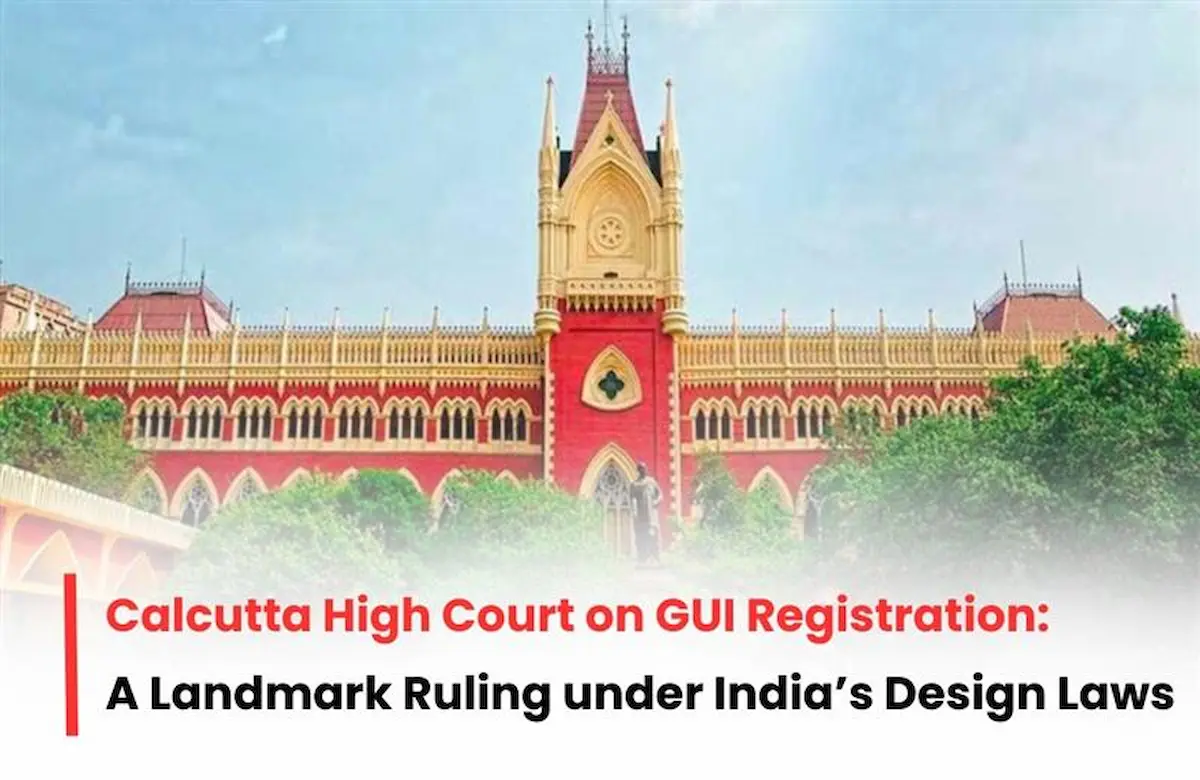
The intersection of technology and intellectual property has reached a significant milestone in India. For years, the legal standing of Graphical User Interfaces (GUIs) remained a subject of intense debate. However, a landmark decision by the Calcutta High Court has finally provided much-needed clarity, establishing a clear precedent for GUI registration under design laws.
The court ruled that GUIs are indeed eligible for protection under the Designs Act 2000. This ruling marks a progressive shift in how India views digital aesthetics and functional design in the modern era.
Understanding the Legal Background of the GUI registration under the Design Laws Ruling
To appreciate the gravity of this decision, one must look at the historical resistance toward digital interfaces. Traditionally, the Indian Design Office was hesitant to grant protection, often arguing that GUIs did not meet the definition of an “article.” The primary contention was that a GUI is only visible when a device is turned on and lacks a permanent physical form.
This narrow interpretation was challenged in the case of Ust Global (Singapore) Pte Ltd vs. The Controller of Patents and Designs. The appellant argued that the visual appeal of a digital interface is a result of creative industrial design. By overturning the previous rejection, the court successfully modernized the framework for GUI registration under Design Laws, stating that the law must evolve alongside technology.
Read Also: CGPDTM Update: Tentative Dates Revealed for Patent and Trademark Exams 2027
Defining the Scope of IP Protection for Digital Interfaces
In the digital age, the visual layout of an application is often as valuable as the code itself. Providing robust Trademark and Patent protection for these assets ensures that companies can safeguard unique user experiences. The court emphasized that the definition of an “article” should not be restricted to purely mechanical or static objects.
Because a GUI is an integral part of a functional product like a smartphone, it qualifies for protection as a finished article. By acknowledging that a design can be applied through electronic means, the court has opened new doors for software developers to pursue GUI registration under Design Laws to secure their creative investments.
Read Also: NBA Legend George Gervin Responds to Caleb Williams’ ‘Iceman’ Trademark Filing
Technical Requirements for Registration
Following the Calcutta High Court ruling, there are specific criteria that a design must meet to be successfully protected:
- Originality: The design must be new and not previously disclosed to the public.
- Visual Appeal: It must appeal to the eye, which is the primary requirement for any design registration in India.
- Application to an Article: The court noted that because a GUI is applied to a screen (which is part of the hardware), it satisfies the “article” requirement.
This interpretation ensures that GUI registration under design laws in India aligns with international standards, where digital designs are routinely protected to encourage innovation.
Enhancing IP Protection Strategies for Tech Companies
For businesses in the tech sector, this judgment serves as a call to action to review their intellectual property portfolios. Prioritizing IP protection is no longer limited to hardware or logos; it now extends to the very screens that users interact with daily.
The ruling provides a stronger legal foundation for enforcement. If a competitor replicates the look and feel of a registered interface, the owner can now seek legal remedies for infringement. This makes GUI registration under design laws a vital step for maintaining a competitive edge and ensuring brand exclusivity.
The Long-Term Impact on Innovation
This judicial pronouncement is expected to foster a more favorable environment for digital creators. By removing ambiguity, the court encourages both domestic startups and international corporations to seek protection for their digital assets in the Indian market.
As we move forward, the legal landscape for digital designs will likely continue to expand. The court has demonstrated that the law is a living instrument, ensuring that the creative efforts of designers are respected in a legally secure technological ecosystem.