
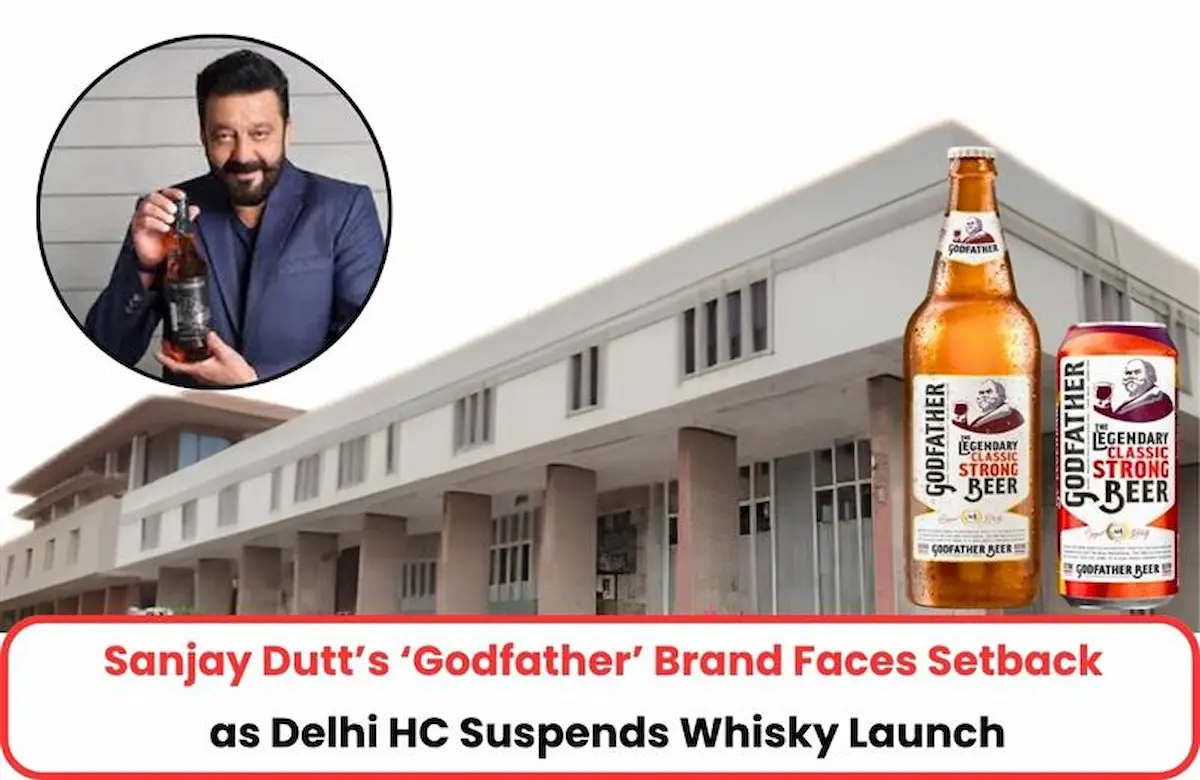
The Indian alcohol beverage industry has recently witnessed a high-stakes legal battle as the Delhi High Court intervened in the commercial rollout of a new premium spirit. In a significant development for Intellectual Property Rights (IPR) enthusiasts and industry stakeholders, the court has effectively paused the launch of “Glenwalk Godfather Whisky”, a product backed by Bollywood actor Sanjay Dutt. This legal intervention stems from a rigorous Godfather Whisky Trademark Case filed by Devans Modern Breweries Limited against Cartel Bros Private Limited.
The dispute highlights the complexities of brand protection in a market where legacy names carry immense commercial weight. Devans Modern Breweries, a well-established name in the brewing sector, moved the court to protect its flagship brand identity. This case serves as a critical reminder of how a trademark registration can cause that level of protection, which can halt even celebrity-backed ventures if they are found to be infringing upon existing intellectual property.
Understanding the Core Arguments in the Godfather Whisky Trademark Case
At the heart of the Godfather Whisky Trademark Case lies the allegation of “dishonest adoption” of a registered mark. Devans Modern Breweries Limited, which has been marketing the popular “Godfather” beer since 1984, approached the Delhi High Court claiming that Cartel Bros had adopted an identical mark for their new whisky venture. The plaintiff argued that the term “Godfather” has acquired substantial goodwill and a unique reputation over decades of use in the Indian market.
In legal terms, the plaintiff asserted that using an identical mark for a similar category of products, namely alcoholic beverages, would inevitably lead to consumer confusion. They emphasized that their prior trademark registration causes that exclusive right to use the name, which must be protected to prevent the dilution of their brand equity. The court, presided over by Justice Tushar Rao Gedela, took note of these submissions, recognizing the potential for trademark infringement and “passing off” where one entity attempts to benefit from the established reputation of another.
Read Also: WIPO and ARIPO Launch Regional Training to Boost Patent Examination in Africa
Key Legal Implications of the Sanjay Dutt Whisky Trademark Case
The Sanjay Dutt Whisky Trademark case gained significant public attention due to the actor’s association with Cartel Bros. However, from a legal perspective, the celebrity status of the backers does not override the fundamental principles of the Trade Marks Act. The defendants, representing the interests of the actor-backed entity, initially faced a strong injunction plea. During the proceedings, the defendants agreed to defer the commercial launch of “The Glenwalk, Godfather Edition” until the next hearing, effectively putting the project on ice.
Beyond just the physical product, the court extended its reach to digital marketing. The Sanjay Dutt Whisky Trademark case saw the court directing the defendants to refrain from issuing any fresh promotional or social media communications regarding the product under the “Godfather” mark. This ensures that the status quo is maintained and that no further brand association is built while the legal ownership of the mark remains under scrutiny. Such a move reinforces how a robust trademark registration causes the immediate cessation of marketing activities, protecting the original owner’s interests during the pendency of the suit.
Read Also: Ahmedabad Court Issues Injunction Against Rebel Foods in ‘Honest’ Trademark Row
The Role of Market Reputation and Prior Use in Alco-Bev Disputes
In any trademark dispute of this magnitude, the concepts of “prior use” and “market reputation” are paramount. In the Godfather Whisky Trademark Case, the plaintiff highlighted that their brand is not just a name but a household identity in the beer segment. They argued that the public associates “Godfather” specifically with their range of beverages. When a new player enters the market with the same name, even in a different sub-category like whisky, it can mislead an average consumer into believing both products originate from the same source.
The Delhi High Court’s decision to halt the launch reflects the judiciary’s commitment to preventing unfair competition. The court noted that the defendants had already distributed products to certain retailers in Maharashtra but had since instructed them not to sell the whisky. This level of judicial oversight in the Godfather Whisky Trademark Case demonstrates the power of IPR laws in maintaining market order. It proves that a valid trademark registration causes a legal barrier that prevents newcomers from encroaching upon the territory of established brands, regardless of the marketing muscle or celebrity backing involved.
Conclusion and Future Outlook of the Trademark Battle
The interim stay on the “Glenwalk Godfather Whisky” launch is a pivotal moment for trademark jurisprudence in India. As the matter is listed for further hearing on April 10, 2026, the industry awaits a final determination on whether the “Godfather” mark can coexist across different types of spirits or if it remains the exclusive property of the original registrant. The Sanjay Dutt Whisky Trademark case will likely set a precedent for how “well-known” marks are protected against new entrants in the premium alco-bev sector.
Ultimately, this dispute underscores the necessity for businesses to conduct thorough trademark searches and respect existing registrations before investing in brand launches. As seen here, failing to respect a prior trademark registration causes massive financial and reputational risk, leading to halted launches and restricted advertising. For now, the “Godfather” of the whisky world must wait for the court’s final word before it can legally pour its first glass for the public.