
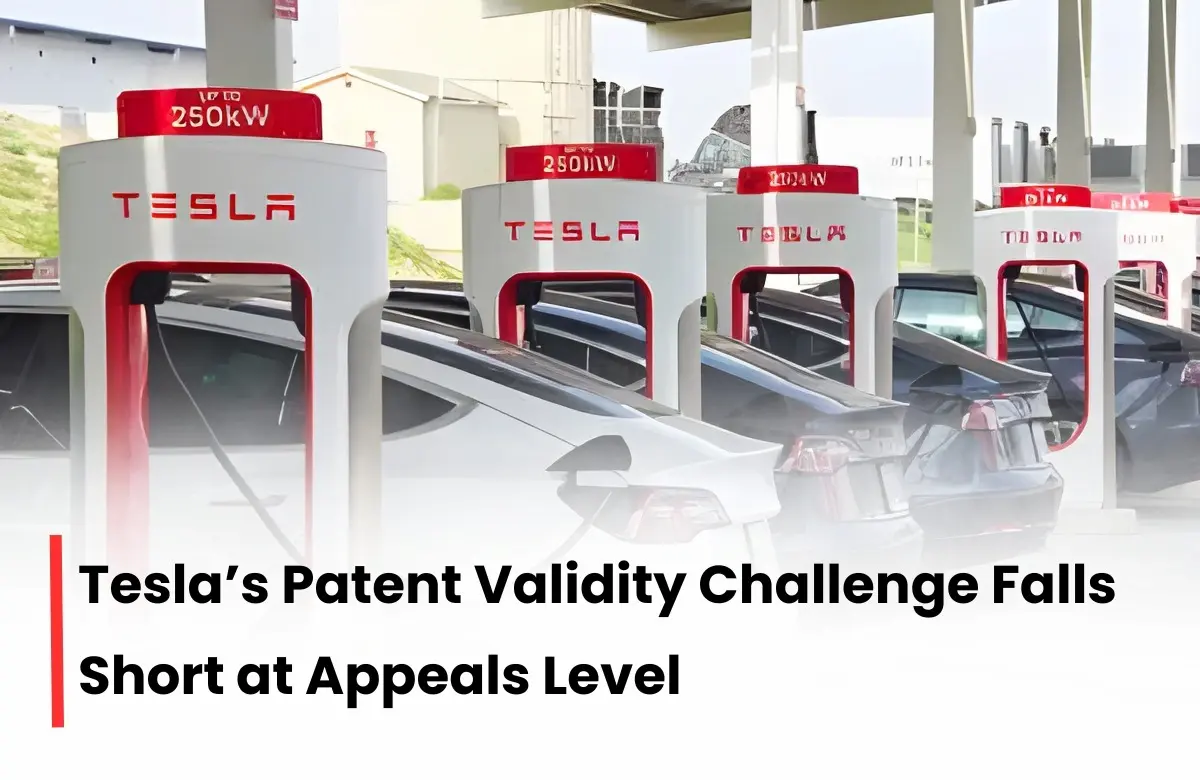
The landscape of electric vehicle infrastructure saw a notable legal shift on February 25 2026, The United States Court of Appeals for the Federal Circuit, often referred to as the CAFC, issued a split decision that went against Tesla. This ruling upheld the validity of several patent claims held by Charge Fusion Technologies, LLC, involving how electric vehicles interact with charging stations.
This Tesla EV Charger Patent case serves as a prime example of how technical definitions within a Patent Filing can determine the success or failure of multi-million dollar infrastructure projects. As the industry moves toward universal charging standards, the legal boundaries of these technologies are becoming increasingly scrutinized.
The Core of the Tesla EV Charger Patent Dispute
The legal battle began when Tesla challenged U.S. Patent No. 10,998,753 at the Patent Trial and Appeal Board. Tesla sought to prove that the technology was not new, citing an earlier system known as “Kato” as prior art. In the world of trademark and Patent Protection, if a company can prove that an invention was already described in previous documents, the patent can be invalidated.
Tesla argued that the Kato system, which helped drivers navigate to charging stations, covered the same ground as Charge Fusion’s claims. However, the Tesla EV Charger Patent Dispute pivoted on a very specific technical distinction: the difference between a human action and an automated computer command.
Analyzing the CAFC Ruling
The majority of the CAFC panel focused on the “Charging Control Limitation” within the patent. Tesla’s legal team argued that a user manually connecting a vehicle to a charger should be considered part of a “charging schedule.” The court disagreed with this interpretation. Instead, the judges found that the patent specifically described an automated process where a computer processor executes instructions to manage power flow.
Because the prior art cited by Tesla still relied on human intervention to initiate the process, the court ruled that it did not cover the same “intelligent” automation found in the Charge Fusion patent. This distinction was the deciding factor in the Tesla EV charging patent appeal.
The decision was not unanimous, which is common in complex technical cases. While two judges supported the “automated” requirement, one judge dissented, suggesting that the patent language might be broad enough to include manual actions. Ultimately, the majority view prevailed, leaving the patent intact.
Impact on Intellectual Property Strategy
This outcome highlights why companies must be extremely precise during the initial Patent Filing stage. Small differences in how a process is described can be the only thing standing between a valid patent and an invalidated one. For Charge Fusion, their focus on the “processor-controlled” aspect of charging proved to be a successful shield.
In the broader context of IP litigation, this case warns large manufacturers that they cannot easily dismiss the patents of smaller entities. Even a company with the resources of Tesla can find itself on the losing side of a technicality if the court finds that the “plain and ordinary meaning” of the patent words favors the inventor.
Future Outlook for EV Charging
The ripple effects of this ruling could influence how charging networks are built across the country. If “intelligent charging” is a protected invention, other companies may need to license this technology or find unique ways to design their systems to avoid infringement.
As the industry grows, we can expect more instances of IP litigation as companies fight for control over the software that manages our power grids and vehicle batteries. Ensuring strong IP Protection remains a cornerstone for any business looking to lead in the green energy transition.
Read Also: Weight-Loss Drugs in India to Become Cheaper After Semaglutide Patent Expiry
Summary of the Legal Outcomes of Tesla EV Charger Patent Dispute
The ruling confirms that Charge Fusion Technologies holds a valid claim over specific automated charging methods. While Tesla has a history of navigating complex legal challenges, this particular loss highlights the importance of technical specificity in patent law. The decision marks a significant moment in the legal history of EV infrastructure, reinforcing the idea that automation is a distinct, protectable category of innovation.