
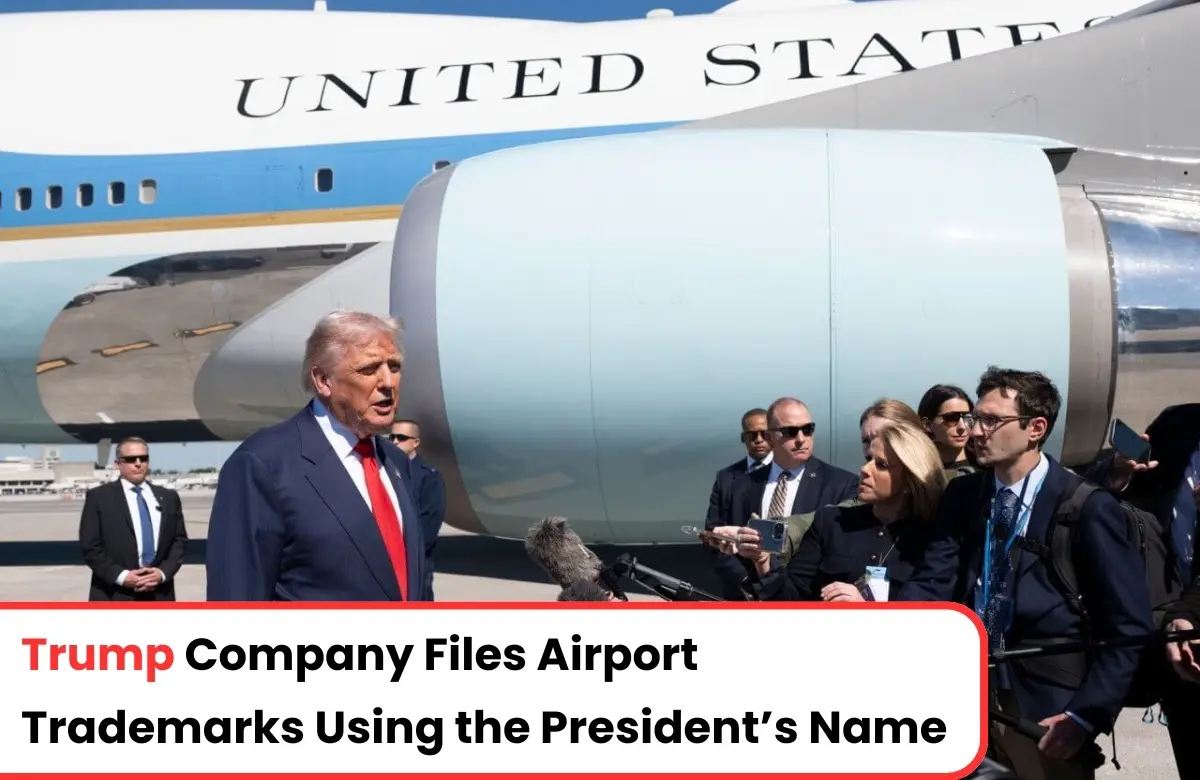
The intersection of political legacy and commercial branding has reached a new milestone as the Trump Organization seeks to solidify its control over the naming rights of potential aviation hubs. Recent filings indicate that the primary business entity of the president has initiated a series of legal maneuvers to secure exclusive rights to his name in the context of airport operations. This move highlights the strategic importance of a Donald Trump trademark Application in safeguarding a brand that has become synonymous with high-profile real estate and luxury hospitality.
The Strategic Move for Trademark Registration
Recent corporate filings indicate that the Trump Organization has officially filed applications for Trademark Registration with the United States Patent and Trademark Office. These filings specifically target categories related to airport services, including the management and operation of terminal facilities. By seeking these protections, the company is effectively laying the groundwork for a future where a major domestic or international airport could bear the name of the president.
From a legal standpoint, the process of Trademark Registration is not merely about vanity. It is a calculated business decision designed to ensure that the brand remains under the centralized control of the family business. This prevents third parties from capitalizing on the name without authorization, ensuring that any future airport project meets the specific branding standards and commercial interests of the Trump Organization.
Ensuring Robust IP Protection and Brand Integrity
In the world of international business, IP protection is the primary defense against brand dilution. Intellectual property refers to creations of the mind, and in this case, the name functions as a valuable source identifier. By filing these new applications, the company is expanding its existing portfolio of intellectual property to cover a sector that it had not previously dominated: aviation infrastructure.
Strong IP protection allows a company to maintain a competitive edge. If the Trump Organization successfully secures these trademarks, they gain the legal authority to license the name to municipalities or private developers who might want to rename an existing airport or build a new one. Without these filings, the company would have much less leverage in negotiating how the name is used or ensuring that it is not used in a way that contradicts their brand identity.
Read Also: IP Manthan 2026: Design Filing and Examination in the EU & India
Guarding Against Potential Trademark Infringement
One of the primary reasons for such proactive filings is to mitigate the risk of trademark infringement. In a legal sense, this occurs when an outside party uses a protected name in a way that could confuse the public about who is actually providing the service or who owns the brand.
If a city council or a private entity were to rename an airfield after the president without a licensing agreement, the Trump Organization could use these new registrations to claim trademark infringement. By having a registered mark on file, the burden of proof in a legal dispute often shifts in favor of the trademark owner. It provides a clear public record of ownership, making it significantly easier to shut down unauthorized commercial uses of the name in the aviation sector.
Expanding the Donald Trump Trademark Application into New Sectors
The scope of these Donald Trump Trademark applications is notably broad. They do not just cover the name on a building; they extend to various services that an airport provides. This includes everything from lounge services to specialized retail within the terminal. The goal is to create a comprehensive legal shield.
The strategy behind a Donald Trump trademark Application has always been about versatility. The name has been applied to hotels, golf courses, and towers. Extending this to airports is a logical progression for a brand that focuses on large scale infrastructure and trophy assets. As the legal process moves forward, examiners will look to see if there is a likelihood of confusion with existing airport brands, though the uniqueness of the name in this specific category makes a successful registration likely.
Conclusion
The decision by the Trump Organization to seek Trademark Registration for airport naming rights is a sophisticated example of how modern brands manage their legacies. By prioritizing Trademark and Patent protection early in the process, the company ensures that it remains the sole arbiter of how the name is commercialized in the skies.
While the political implications of naming an airport after a president often dominate the headlines, the underlying story is one of rigorous brand management. Through these filings, the company is building a legal fortress to prevent trademark infringement and to ensure that the Donald Trump trademark Application remains one of the most protected and controlled assets in the global marketplace. Whether or not the public sees an airport bearing this name in the near future, the legal groundwork for such a reality is now firmly in place.