
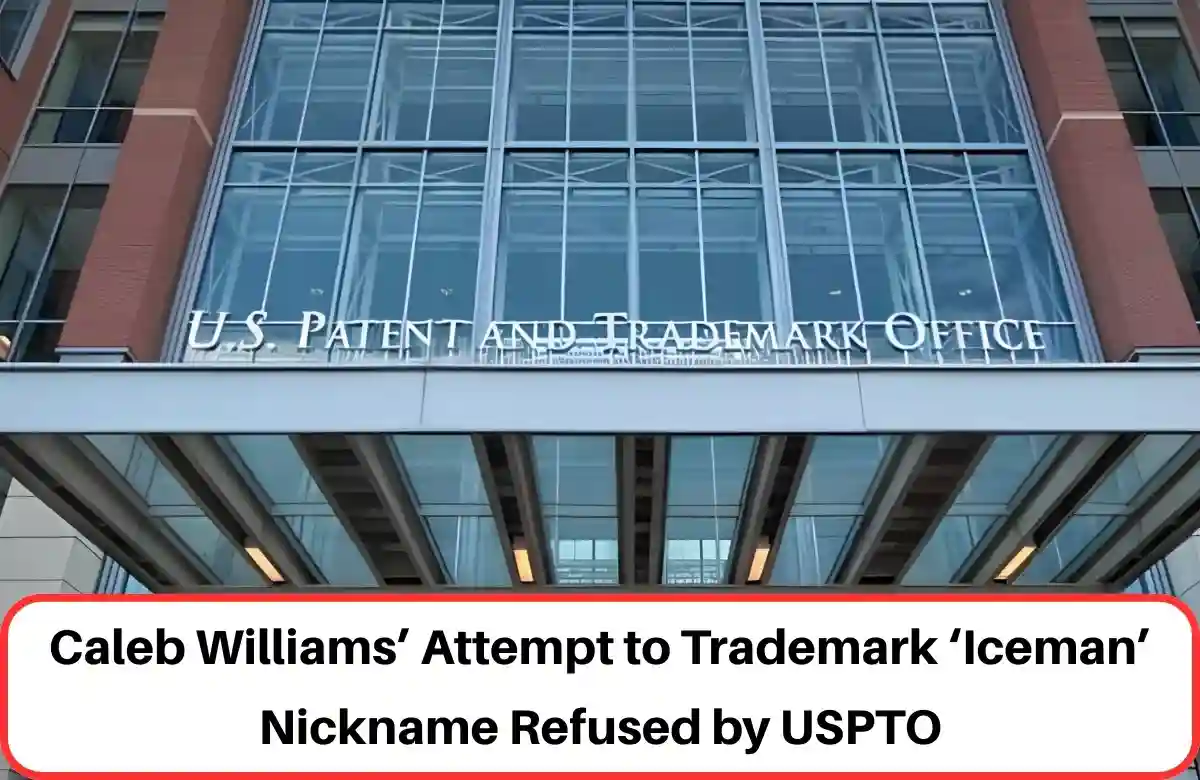
The United States Patent and Trademark Office just issued an initial refusal for a trademark application filed for Chicago Bears quarterback Caleb Williams. He wanted exclusive branding rights for his nickname. But the federal agency said no. Why? Because it conflicts with an existing registration. Intellectual property attorneys confirm that the Caleb Williams Iceman trademark refused action stems directly from federal standards meant to stop consumer confusion in the marketplace.
Let’s look at the actual paperwork. On March 16, a corporate entity representing the quarterback filed a formal Caleb Williams trademark application. The goal was to register the word mark for a variety of consumer items. This federal filing sought statutory protection for sports apparel, athletic footwear, bags, water bottles, sunglasses, and digital collectibles. But when the agency checked the master register, it stopped the file. The USPTO rejects Iceman trademark action protects previous applicants who already hold valid rights.
The main obstacle is a prior intellectual property registration from 1988. Specifically, the examiner cited a direct conflict with the LaCrosse Footwear Iceman trademark, which covers a line of insulated, heavy-duty boots. Under statutory guidelines, a new application cannot be approved if it mirrors an active mark and risks misleading buyers. The examining attorney concluded that letting a new brand use the same name for similar consumer goods creates an impermissible legal overlap.
The Basis for the Decision as the USPTO Rejects Iceman Trademark Application
How does the government evaluate a new brand name? It uses a strict statutory framework to spot conflicts. In this case, the reviewing attorney found a clear likelihood of confusion. The formal office action states that the marks are identical in appearance, sound, and meaning. They create the same commercial impression.
The legal evaluation centers on the specific goods listed in the Caleb Williams trademark application. Because the quarterback wants protection for clothing, his application hits the exact market space held by the LaCrosse Footwear Iceman trademark. Under trademark examination standards, apparel and footwear are highly related goods. Therefore, the examiner concluded that consumers might assume the football player’s apparel and the company’s insulated boots come from the same corporate source.
Read More: WIPO Intellectual Property Launches Benchbook for Nigerian Judiciary to Strengthen IP Adjudication
Examining Commercial Status and the LaCrosse Footwear Iceman Trademark Overlap
But there is a twist here involving the commercial market status of the older brand. While the LaCrosse Footwear Iceman trademark remains active on the federal register, public records suggest the company may no longer sell products under that name. The Oregon-based business seems to have shifted its marketing focus elsewhere. Under United States intellectual property law, you must maintain continuous commercial use of a mark to keep it alive.
If a company stops using a name with no intent to return, the registration faces abandonment. This vulnerability gives the quarterback’s legal team a potential remedy as they address why the USPTO rejects Iceman trademark rights for his clothing line. If his attorneys can prove the original footwear company abandoned the name, they can file a formal cancellation petition to clear the register.
Next Legal Steps and Why the Caleb Williams Iceman Trademark Refused Decision Is Not Final
Is this the end of the road? Not at all. An initial office action is never a permanent denial. In fact, roughly two-thirds of all new applications face an initial rejection during the preliminary review phase. The quarterback’s legal team has a specific window of time to file an official response. They can submit structured legal arguments or amend the application to resolve the statutory issues.
To counter the Caleb Williams Iceman trademark refusal, the legal team can use a few specific strategies:
- They can file a request to divide the application, moving non-clothing items like sunglasses or water bottles forward while leaving the disputed apparel behind.
- They can submit evidence proving that football merchandise and heavy-duty hunting boots occupy totally separate commercial markets, meaning consumers won’t be confused.
- They can start a cancellation proceeding against the 1988 registration if they confirm the original company stopped using the name.
- They can try to negotiate a formal coexistence agreement with the current registration holder so both brands can operate safely.
Read More: WIPO Finance Pilot Project in Colombia in Colombia Through New MOU
We should also note that other sports figures have used this moniker. Basketball legend George Gervin and mixed martial arts veteran Chuck Liddell both share the nickname. While those athletic associations did not cause this specific footwear-based rejection, they could pose future challenges if this application survives. For now, the future of the Caleb Williams trademark application depends entirely on how his legal team answers the statutory objections raised by the government.