
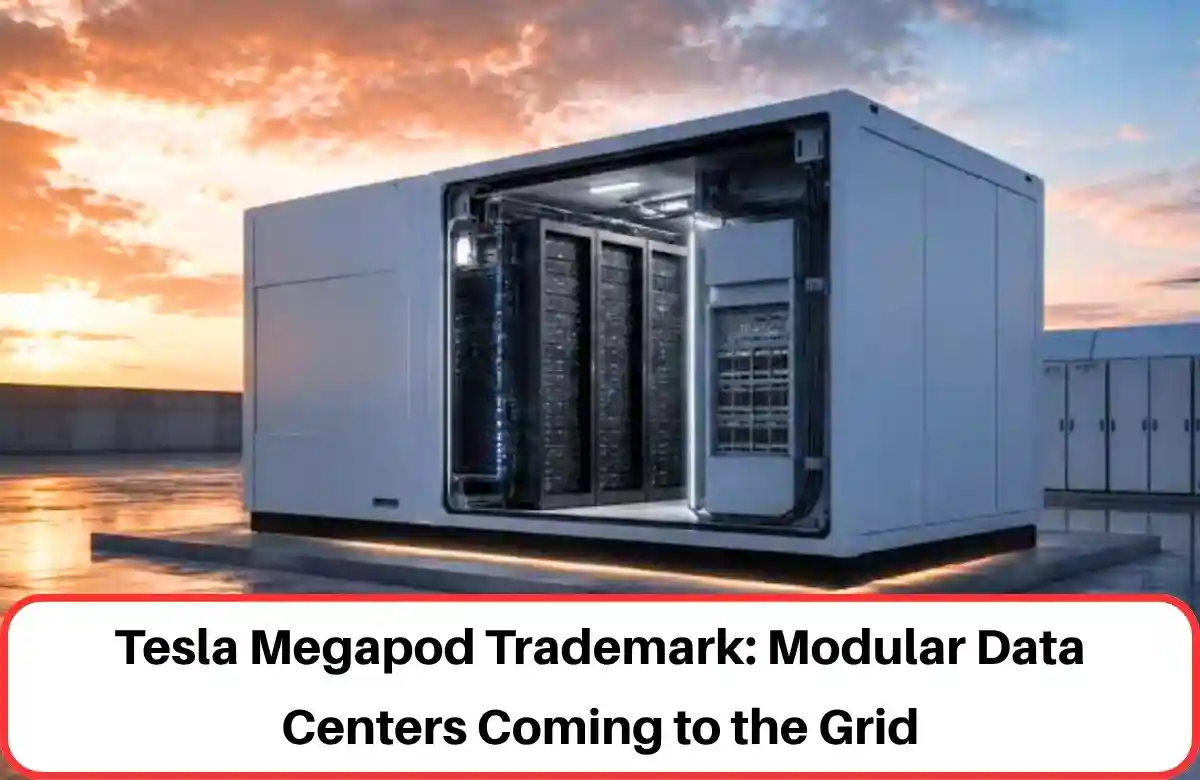
Tesla recently filed a new trademark application with the United States Patent and Trademark Office. This signals a clear move into commercial artificial intelligence computing infrastructure. In this official legal filing, we see a new product name that suggests a modular approach to physical data storage and processing units. This development lands Tesla right inside a highly competitive sector. Currently, established semiconductor and enterprise hardware manufacturers dominate this space. What is Tesla Megapod? Based on the official legal documentation, the Tesla Megapod Trademark is classified under computer hardware categories. Specifically, it covers self-contained, modular computing systems designed to manage intensive artificial intelligence workloads. The statutory filing indicates that the Tesla Megapod consists of integrated hardware platforms. These platforms combine core processing servers, networking components, internal power distribution systems, and specialized thermal cooling mechanisms into a unified structural enclosure. It’s a significant shift in corporate strategy. The Tesla trademark Megapod filing signals an intent to market physical enterprise server infrastructure directly, rather than relying solely on the procurement of third-party hardware components for internal operations.
Through its intellectual property counsel, the automotive and energy storage manufacturer submitted the application as an intent-to-use filing under serial number 99893717. This specific legal designation establishes a priority date for the corporate entity. It protects the brand name prior to official market introduction or public product deployment. The statutory goods-and-services description within the Tesla trademark Megapod application details a fully integrated, turnkey computing environment. You won’t find individual components or standalone processors listed here. Observers within the technology sector note that this filing follows previous corporate decisions regarding internal infrastructure development. For instance, the company recently halted its internal Dojo supercomputer architecture project. But why pivot now? The establishment of this new legal trademark suggests a restructured approach to commercial enterprise hardware. The company is focusing heavily on prefabricated, scalable solutions that can be deployed directly onto industrial energy grids.
Technical Specifications Enclosed Within the Tesla Modular Data Center Documentation
The underlying framework of a Tesla modular data center relies on the consolidation of several distinct operational sub-systems into a singular prefabricated housing unit. The documentation submitted to the regulatory authorities specifies that these systems incorporate advanced computer servers alongside dedicated artificial intelligence data processing units. To maintain stable, continuous operation, each individual Tesla modular data center includes high-efficiency power distribution units and internal fluid or air cooling systems to manage the heat generated by dense computing clusters. Additionally, the filing encompasses downloadable utility software designed to monitor system metrics, optimize thermal performance, and balance incoming electrical loads. By engineering an enclosed architecture, the corporation aims to deliver pre-configured computing sites. This reduces the standard timeline required to construct traditional, stick-built mainframe facilities.
Read More: Global Recognition for India: Justice Prathiba M Singh Inducted into Prestigious IP Hall of Fame
- Integrated Server Units: High-density processing nodes optimized specifically for localized artificial intelligence training and inference operations.
- Power Allocation Systems: Built-in distribution hardware designed to interface directly with utility grids or industrial-scale localized battery storage networks.
- Thermal Regulation Hardware: Closed-loop cooling mechanics engineered to prevent component degradation during continuous high-intensity computational tasks.
- Network Management Components: Enterprise-grade routing and switching systems to handle massive internal and external data traffic volumes.
Competitive Market Environment for the Tesla Megapod Enterprise Hardware
The entry of the Tesla Megapod into the commercial technology sector places the manufacturer in direct competition with established enterprise infrastructure providers. Currently, the market standard for modular, high-density artificial intelligence computing is defined by systems like the Nvidia DGX SuperPOD and associated liquid-cooled server racks produced by corporations such as Dell and Supermicro. These existing commercial systems utilize highly advanced graphics processing units and specialized network fabrics to link thousands of individual processors together. Furthermore, the selection of the specific product name presents potential intellectual property conflicts. Competing engineering companies, including Mitsubishi Electric Power Products and industrial immersion-cooling developer Submer, already hold active trademarks or product lines using identical or highly similar nomenclature within related industrial and electrical classes.
Grid Integration Infrastructure Options for the Tesla Modular Data Center
The strategic utility of a Tesla modular data center rests primarily on its alignment with the existing industrial energy storage business operated by the corporation. Large-scale data operations require massive quantities of stable electrical power. Because of this, we see an increased demand for localized grid stabilization infrastructure. The manufacturer currently produces industrial battery storage units, which are actively deployed by third-party data facilities to manage peak electrical loads and guarantee uninterrupted operations. By developing a Tesla modular data center that natively pairs with these battery networks, the company can offer enterprise clients a fully integrated energy and computing package. This specific grid-adjacent strategy addresses a critical infrastructure bottleneck. It’s a vital fix, as the expansion of artificial intelligence processing remains heavily constrained by regional electrical grid capacity and power delivery limits worldwide.
Read More: How Indian Courts Are Handling AI Copyright Cases?