
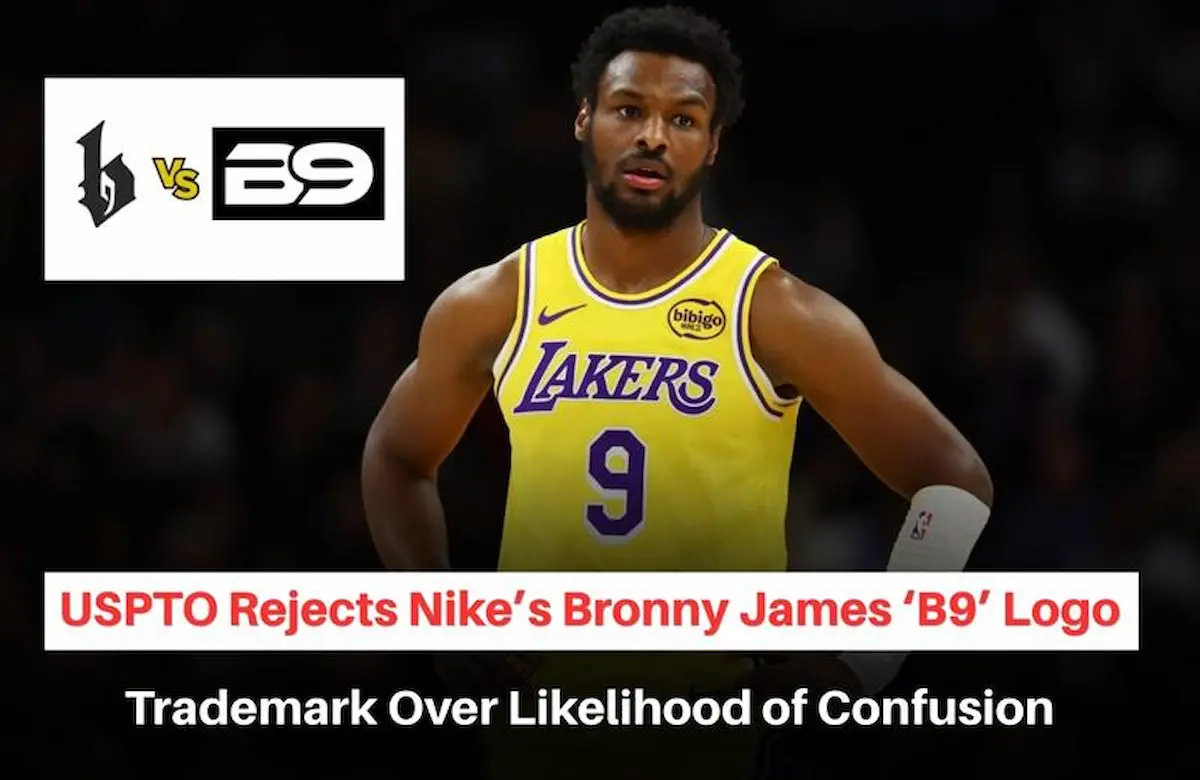
The high-stakes world of professional sports branding just hit a major legal roadblock for one of the most famous names in the NBA today. In a move that has surprised many fans but perhaps not the legal experts, the Bronny James Trademark Rejected by the United States Patent and Trademark Office. The decision involves a stylized “B9” design that Nike was hoping to turn into a cornerstone of the young Lakers guard’s brand. This recent Bronny James trademark news serves as a stark reminder that even with the backing of a multi-billion-dollar corporation, the federal government does not hand out brand ownership without a fight.
Why the Bronny James B9 Trademark Faced a Federal Rejection
The core of the issue lies in a very simple concept called “likelihood of confusion.” When Nike filed the application for the Bronny James B9 trademark, their goal was to lock down a signature look featuring a lowercase letter “b” with a “9” cleverly tucked into the curve. However, a trademark attorney at the USPTO flagged the design because it looked and sounded far too similar to a mark already owned by an Austin-based company called Back9 Golf Apparel.
In the legal world, maintaining proper IP protection is all about making sure customers aren’t confused about who is actually making their clothes. Because both Bronny’s team and the golf brand filed their marks for general apparel and footwear, the government stepped in. The examiner, P. Scott Craven, noted that since both logos represent the alphanumeric combination of “B9,” they are essentially phonetic twins. If you walked into a store and saw “B9” on a hat, the law worries you might not know if you’re buying Bronny’s gear or golf wear from Texas.
The Impact of Having the Bronny James Trademark Rejected
This isn’t just a minor paperwork delay; it is a significant hurdle for Bronny’s commercial future. When news broke about the Bronny James trademark-rejected status, it highlighted the fact that trademark law is a great equalizer. It doesn’t matter if your father is LeBron James or if you play for the most famous team in basketball. The USPTO treats every applicant the same.
To keep the system fair and ensure robust IP protection for everyone, the government must prevent big brands from stepping on the toes of smaller, established businesses. Back9 Golf Apparel has been using its mark since 2020 and officially registered it in 2022. Because they were there first, they have the upper hand. This Bronny James trademark news shows that the “first to file” rule is the gold standard in the United States, and being a celebrity doesn’t give you a shortcut around it.
Read Also: How to Deal with Trademark and Patent Violations: A Step-by-Step Guide
What Happens Next Following This Bronny James Trademark News
Now that the initial application has been blocked, Nike and Bronny have a few ways to handle the situation. They have roughly three months to respond to the government’s refusal. One option is to try to argue that a basketball fan and a golf fan are looking for completely different things, meaning there is no real chance of confusion. However, legal experts suggest this is a tough sell because most people wear athletic gear for all kinds of sports.
Another path for the Bronny James B9 trademark would be a “consent agreement.” This is basically a private deal where Nike would pay Back9 Golf a sum of money to allow the logos to coexist. While this is a common way to solve these problems, it can be incredibly expensive. This is exactly why companies invest so much time and money into Trademark and Patent protection early on, to avoid having to pay off other brands later just to use a specific logo.
The Future of Branding and the Bronny James B9 Trademark
Looking ahead, we might see a total redesign of the “B9” logo. If Nike decides that the legal fight is too long or the payout to the golf company is too high, they may just go back to the drawing board. This would mean creating a new visual identity that doesn’t rely on the “B9” combination, or at least one that looks so different that no one could confuse it with another brand.
This situation is a perfect case study for any athlete or creator looking to build their own business. It proves that the “likelihood of confusion” is a very real threat to any brand. For now, the Bronny James trademark rejected status remains a major talking point in the industry. Whether he eventually gets to use the logo or has to pivot to something new, this Bronny James trademark news is a fascinating look at the intersection of sports, fame, and the very strict rules of the American legal system. The Trademark Protection is hard work, and as Bronny is learning, the USPTO is the ultimate referee in the game of IP protection.